Project Summary
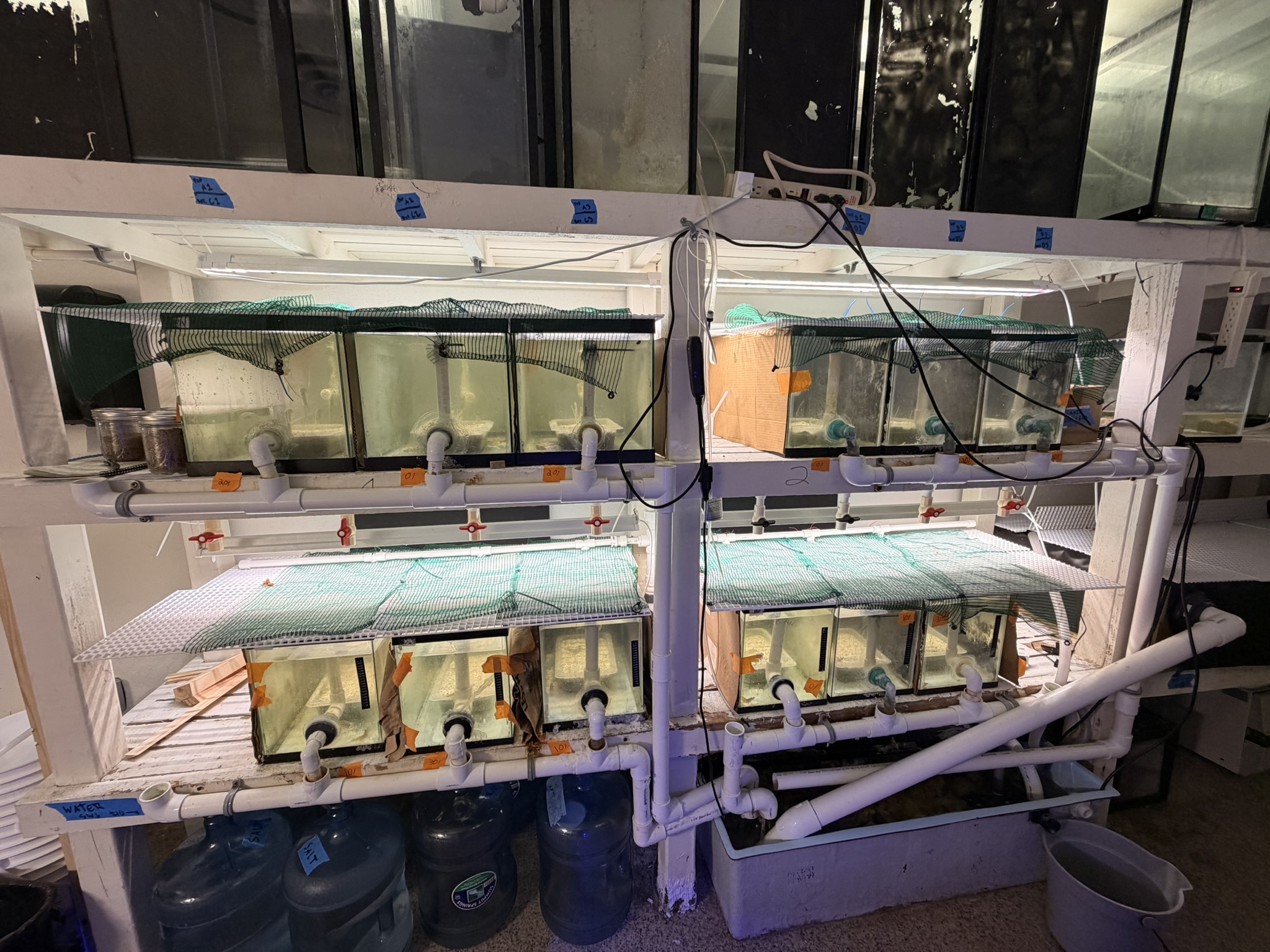
Commercial fish feed represents over half of all production costs in the aquaculture industry, restricting farm profitability across global markets. Breweries compound this resource challenge by generating roughly three gallons of high-strength wastewater for every gallon of beer produced, with much of that volume discarded as spent yeast that depletes oxygen levels in receiving waterways. This project addresses both constraints by converting brewery waste into a viable feed supplement, testing whether spent brewer's yeast can reduce aquaculture input costs while diverting pollutants from marine systems. The processing phase began with collecting several gallons of spent yeast from Intracoastal Brewing Company. Thin layers were spread across silicon trays and dehydrated at 140°F for eight hours, yielding a stable dry product suitable for long-term storage. The dried yeast was ground and mixed with commercial Zeigler SI shrimp feed at three concentration levels: 10%, 20%, and 30% yeast by weight, with a 0% control treatment using only commercial feed. Each mixture was pelletized and distributed across randomized replicate tanks, with four to five shrimp of similar size and age assigned to each treatment group. Salinity, temperature, lighting, and aeration remained constant throughout the trial period. Behavioral observations during feeding revealed a clear preference pattern tied to yeast concentration. Shrimp in the 0% control tanks actively avoided their feed, spitting out pellets or moving to other areas of the tank to graze on algae forming on rocks. All control feed remained uneaten and required manual removal. The 10% treatment showed marginal improvement, with shrimp consuming roughly half the provided feed but exhibiting low activity levels. Tanks receiving 20% and 30% yeast concentrations displayed markedly different responses. Shrimp in these groups moved rapidly toward food introduction points and consumed pellets quickly. Visual activity levels in the higher yeast treatments exceeded those in the control by a substantial margin, with control shrimp growing lethargic as the trial progressed. These results point to spent brewer's yeast as both palatable and potentially necessary for maintaining feeding behavior in shrimp aquaculture systems. The fact that control shrimp rejected standard commercial feed entirely suggests the yeast provides a nutrient or flavor profile absent from conventional formulations. Pompano kept in a nearby tank also found the yeast-supplemented feed palatable, indicating possible applications beyond shrimp production. The cost implications carry real weight: breweries currently treat spent yeast as waste, making it available at no charge to aquaculture operations willing to process and incorporate it.
Project Objective
Convert spent brewer's yeast into a nutrient-dense feed supplement through dehydration and pelletization, then evaluate shrimp feeding behavior, palatability, and survival rates across varying yeast concentration levels compared to commercial feed alone.
Manufacturing Design Methods
Collected spent yeast was spread in thin layers on silicon trays and dehydrated at 140°F for eight hours. The dried product was ground and stored in airtight containers before being weighed and mixed with commercial shrimp feed at 10%, 20%, and 30% ratios by weight. Mixed feed was processed into uniform pellets and distributed to randomized treatment tanks for comparative feeding trials.
Analysis
Shrimp in higher yeast concentration treatments (20% and 30%) demonstrated increased feeding activity and pellet consumption compared to control groups. Control tanks exhibited food rejection behaviors and lethargy, while 10% treatments showed intermediate responses. The consistent preference for yeast-supplemented feed across the trial period suggests both palatability and potential nutritional necessity.
Future Works
Extended feeding trials using alternative commercial feed bases would test whether the observed preference patterns hold across different formulations. Increasing yeast ratios beyond 30% may prove feasible given the strong behavioral responses at higher concentrations. Trials incorporating pompano and other species could expand the range of aquaculture systems benefiting from brewery waste diversion. Long-term growth and health metrics would establish whether palatability gains translate to improved production outcomes.
Acknowledgement
Intracoastal Brewing Company, Saltwater Cowboy, Felix Gabriel, Abe Stephens, Sam Pringle, Mara Skadden, Ashley Herbkersman, Ethan Rupp, Jayden Zhang, Lauren Magnuson, Eliana Wilson, V Marion


/prod01/fit-cdn-pxl/media/header-images/showcase-header.jpg)