MENU

What is Aerospace Engineering?

Get a Master's in Aerospace Engineering

The Aerospace Engineering Graduate Certificate

Earn an Ed.S. in Aerospace Engineering

The Ph.D. in Aerospace Engineering

Advance aerospace engineering through original research on complex challenges.

In the aerospace engineering Ph.D. program, students conduct research in aerodynamics, propulsion, structures, flight mechanics and space systems, developing next-generation aircraft and spacecraft technologies while contributing new knowledge to the field.

Florida Tech’s interdisciplinary research environment and close faculty mentorship support students from early investigation through dissertation. With access to advanced laboratories, high-performance computing and partnerships with leading aerospace organizations, students pursue independent, creative research with real-world relevance.

Graduates emerge ready to lead innovative programs and shape the future of aerospace engineering worldwide.

Tier 1
Best National University
U.S. News & World Report
Top 5.8%
World University Ranking
The Center for World University Rankings

Why Choose Florida Tech for Aerospace Engineering?

Situated in the heart of the Space Coast, Florida Tech draws on a long legacy of aerospace innovation. Proximity to federal and commercial launch operations and a dense network of aerospace companies places students at the forefront of the field’s rapid evolution. Small research teams, close faculty mentorship and an interdisciplinary environment provide the focus and preparation needed to shape the future of aerospace engineering.

Florida Tech’s aerospace engineering Ph.D. program offers a rigorous academic environment built around close faculty mentorship. With a low student-to-faculty ratio, professors work directly with graduate students on advanced research projects and guide them through each stage of doctoral development.

Students collaborate with experienced aerospace researchers leading major projects funded by NASA, the U.S. Air Force, the U.S. Space Force, the U.S. Navy and the National Science Foundation. Faculty expertise flows directly into the lab, with a strong emphasis on sustained, one-on-one engagement.

At Florida Tech, students collaborate with expert faculty in laboratories equipped for advanced discovery. Graduate research often leads to presentations at major conferences and publications in journals such as Aerospace America and the Journal of Fluid Mechanics.

Ph.D. research spans aerodynamics, propulsion, materials, robotics and autonomy. Projects may include high-fidelity simulations of turbulent flows, modeling advanced propellants, designing composite structures, developing guidance and control strategies for space vehicles, and advancing autonomous aerospace systems.

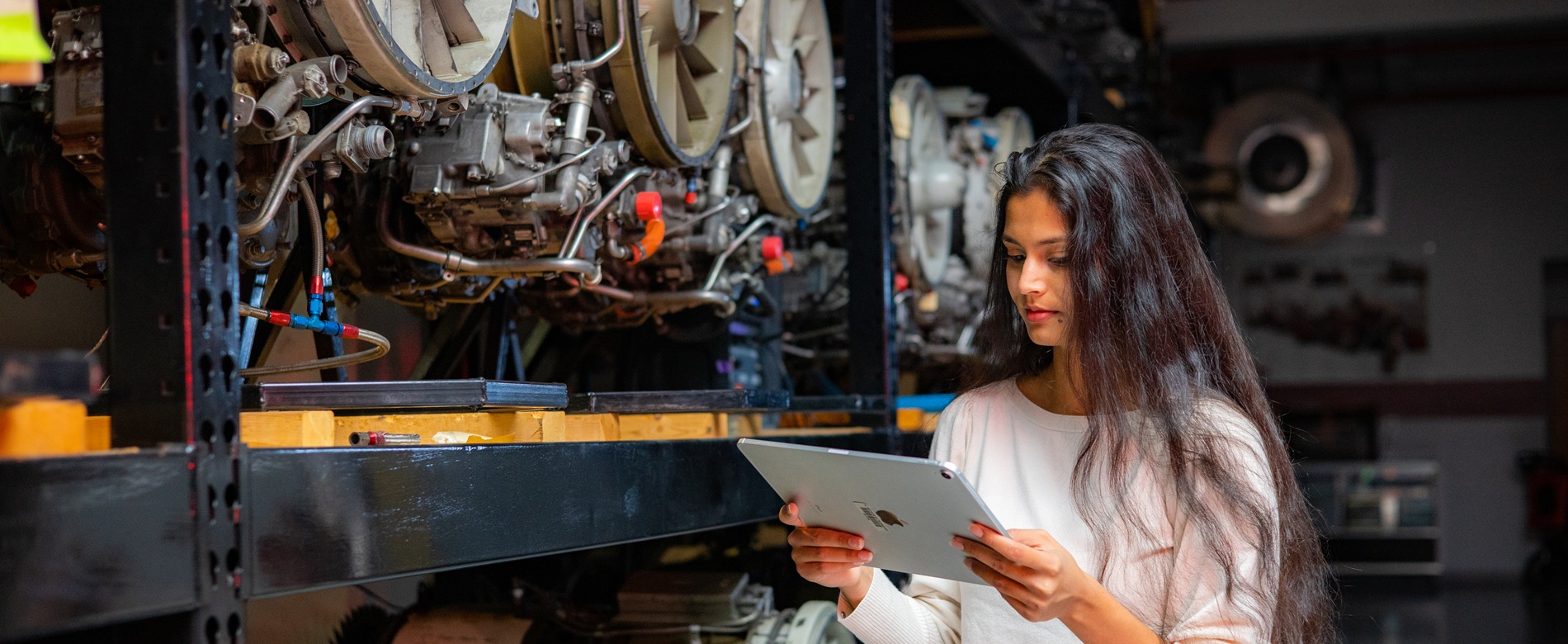
Florida Tech gives Ph.D. students access to state-of-the-art laboratories and specialized equipment, including wind tunnels, shock tubes, rocket and turbine thrust stands, a spacecraft maneuver testbed and tools for metacomposites research.

Computational work is supported by high-performance computing resources, including the AI.Panther HPC Cluster, which enables large-scale simulations, design optimization, multi-physics modeling and AI-driven aerospace applications.

Academic units at Florida Tech may offer graduate student assistantships to full-time, degree-seeking graduate students on a competitive basis.

Teaching Assistants (TAs) support faculty in teaching undergraduate and graduate courses, including tasks such as grading, tutoring and conducting office hours. First-time TAs attend a teaching assistant seminar to prepare for their responsibilities.

Research Assistants (RAs) collaborate with faculty on projects funded by government agencies, private sponsors and university research funds.

For current information about assistantships, please contact the Department of Aerospace, Physics and Space Sciences.

Florida Tech’s 130-acre campus sits at the heart of the Space Coast, home to one of the nation’s largest high-tech workforces. Proximity to NASA, commercial launch facilities and a dense network of aerospace and defense companies creates opportunities for research collaboration, internships and hands-on engagement with active aerospace programs.

Florida Tech offers a safe and welcoming campus environment that supports advanced research alongside personal well-being. The campus includes extensive green spaces, such as the Joy and Gordon Patterson Botanical Garden, along with facilities like the Holzer Health Center and Clemente Center for health, fitness and stress management.

Located minutes from the Indian River Lagoon and 72 miles of Atlantic beaches, the university combines access to outdoor recreation with proximity to industry and government organizations that contribute to research collaboration and career development.

Graduate students from around the world come together at Florida Tech in a campus community that fosters international collaboration and innovation. This environment encourages students to work across cultures and perspectives, preparing them for research and professional settings around the globe.

International Student and Scholar Services (ISSS) supports international students throughout their academic journey, providing guidance on immigration matters, serving as a liaison with sponsoring agencies and foreign governments, and sharing information about campus and community resources.

Applicants to the doctoral program in aerospace engineering typically hold a master’s degree in aerospace or mechanical engineering—or a closely related field—with a strong foundation in the core sciences and mathematics.

For details regarding application and admission, please see the university's graduate admission requirements.

Careers in Aerospace Engineering

Florida Tech’s location on the Space Coast supports strong connections to regional and international aerospace organizations, including NASA, the Department of Energy, the Department of Defense, the FAA and industry partners.

Students engage in collaborative research with organizations such as Boeing, Northrop Grumman, L3Harris Technologies, Embraer, Piper Aircraft, Patrick Space Force Base, RTX Corporation, GE and Pratt & Whitney.

Graduates pursue careers in aerospace design and development, guidance and control, autonomy and AI-enabled flight, propulsion, spacecraft structures and materials, CFD and turbulence modeling, and spacecraft systems engineering. Career paths span government laboratories, commercial aerospace firms, research institutions and academia.

Note: Employment data reflect positions commonly associated with this field. Many Ph.D. graduates go on to academic, leadership and advanced research, technical and analytical roles not captured here.

Florida Tech Career Services helps students, alumni and employers connect through career planning, job search support and recruitment resources.

For information on job outlook, pay and working conditions in this field and related fields in the United States, see the Occupational Outlook Handbook from the U.S. Bureau of Labor Statistics.

Advanced Degree Options

Explore Doctoral Research

The dissertation is the centerpiece of the Ph.D., allowing students to deepen their expertise while contributing original research to aerospace engineering.

Research spans applied aircraft and spacecraft topics such as UAVs and eVTOL systems, advanced propulsion and energy systems, structural mechanics and composites, orbital system modeling and small satellite missions. Projects often integrate experimental, computational and data-driven approaches, including work in fluid mechanics, control, trajectory optimization and machine learning for aerospace systems.

Browse recent dissertations in the Florida Tech Scholarship Repository.

Explore the Aerospace Engineering, Ph.D., Curriculum

The Aerospace Engineering, Ph.D., Curriculum

The Ph.D. in aerospace engineering is awarded in recognition of original contributions to the field and the ability to investigate scientific and engineering challenges independently, rather than for completing a set curriculum. The program combines advanced coursework with focused research, guiding students toward meaningful contributions to the understanding of a specific problem.

Students complete formal coursework in a major area of specialization, two related areas and mathematics. There is considerable flexibility in course selection, and offerings from other engineering and science programs may be used to satisfy related area requirements.

Dissertation research may be analytical, computational, experimental or a combination of these approaches.

A minimum of 42 credit hours beyond the master's degree is required.

Check the catalog for a description of all courses. Check the catalog for detailed degree requirements.

Download the Aerospace Engineering, Ph.D., Curriculum now!

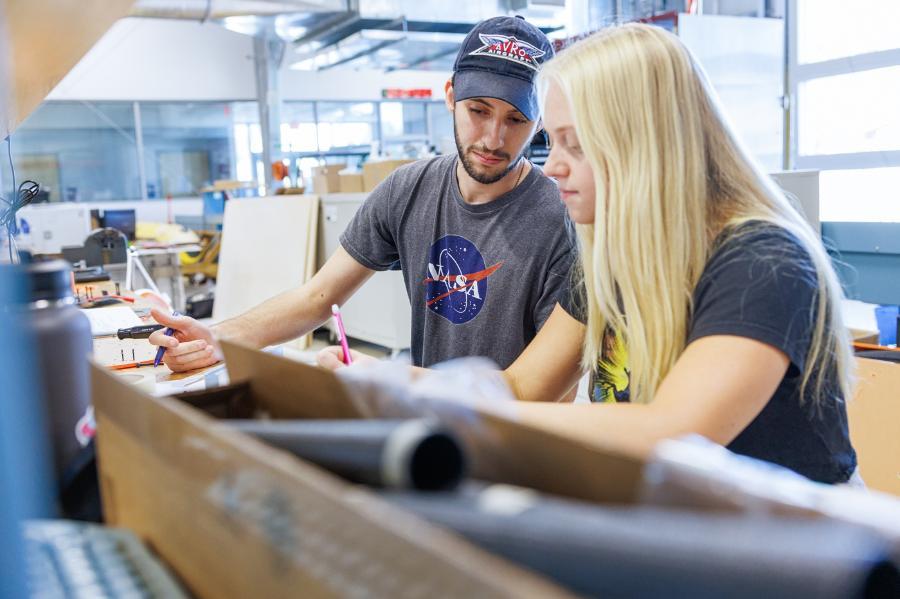
Aerospace engineering students collaborate on a project

Aerospace Engineering Research Focus Areas

Ph.D. research spans aerodynamics and fluid dynamics, aerospace structures and materials, combustion and propulsion, and flight mechanics and controls. Ongoing research in these focus areas supports a wide range of interests across the field.

Aerodynamics and Fluid Dynamics

Research includes turbulent and high-Mach flows, reactive flow modeling, aerodynamic testing, wind engineering, and advanced numerical methods for predicting vehicle performance.

Aerospace Structures and Materials

Projects explore fatigue, fracture, corrosion, composites, additive manufacturing, structural mechanics, and aircraft design to improve material performance and vehicle reliability.

Combustion and Propulsion

Focus areas include combustion, chemically reactive flows, rocket and high-speed propulsion systems, and modeling of propellants and energetics for performance prediction and system development.

Flight Mechanics and Controls

Research emphasizes dynamics, guidance, navigation, control, optimization, and aerospace robotics, advancing control laws, autonomous behaviors, and mission strategies for aircraft and spacecraft.

Learn more about Aerospace Engineering at Florida Tech on the Aerospace, Physics and Space Sciences website.

Build on a Legacy of Aerospace Innovation

Florida Tech’s leadership in aerospace engineering grew alongside the early U.S. space program and continues today through advanced doctoral research.

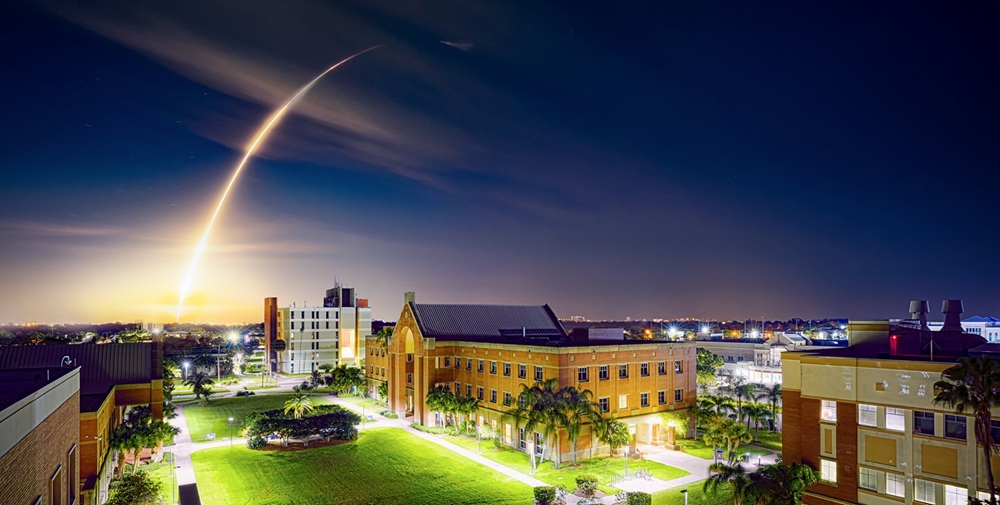
Launches are part of the campus landscape, reflecting decades of connection to flight, space exploration and the evolving challenges that shape aerospace engineering research.

Loading...
Edit Page