
MENU

What is Biomedical Engineering?

Get a Master's in Biomedical Engineering

The Biomedical Engineering Graduate Certificate

Earn an Ed.S. in Biomedical Engineering

The Ph.D. in Biomedical Engineering

Engineer breakthroughs in health technology.

The Ph.D. in biomedical engineering integrates engineering, life sciences and computational methods to advance solutions in human health. Students pursue original research, collaborate across disciplines and develop deep expertise through advanced laboratory and computational work.

Areas of specialization include:

  • Biomechanics
  • Biomedical instrumentation, imaging and computation
  • Biomaterials and tissue engineering
Tier 1
Best National University
U.S. News & World Report
Top 5.8%
World University Ranking
The Center for World University Rankings

Why Choose Florida Tech for Biomedical Engineering?

Florida Tech provides a research-focused doctoral environment where students work closely with faculty, engage in interdisciplinary collaboration and access advanced laboratory and computational resources. The program supports the development of technical depth and research independence needed to advance biomedical technologies and health solutions.

In the biomedical engineering Ph.D., engineering and life sciences converge to address complex medical challenges through advanced coursework, doctoral seminars and in-depth research.

Students work closely with distinguished faculty whose research spans optical tomography, blast-related injuries, speech production, AI, orthopedics and medical trauma prevention. Faculty draw on expertise across mechanical, chemical, electrical and computer engineering, as well as computer science, creating a highly interdisciplinary research environment.

Guided by experienced mentors, doctoral students develop the technical depth, research skills and professional perspective needed to make a lasting impact in biomedical engineering.

As a doctoral student in biomedical engineering, you work in a highly interdisciplinary research environment focused on developing advanced technologies and computational approaches to diagnose, monitor and treat human disease.

Students contribute to research in areas such as biomaterials for targeted drug delivery, biocompatible medical devices, computational modeling of treatment effectiveness and noninvasive diagnostics for conditions including cancer, stroke and Parkinson’s disease.

Through dissertation research, students explore a chosen specialization in depth and make original contributions that advance biomedical engineering.

Florida Tech’s location on the Space Coast places biomedical engineering doctoral students near a concentration of high-tech, aerospace and medical research organizations. Proximity to NASA-Kennedy Space Center and regional health systems supports collaborative research, clinical translation and professional engagement.

Students may engage with nearby hospitals, health centers, laboratories and research institutes, including Health First Hospitals, the Cancer Care Center of Brevard, the Back Center and Lake Nona Medical City in Orlando.

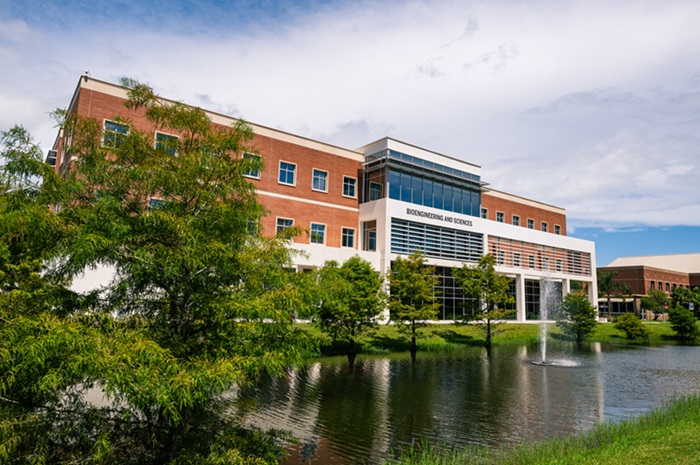
Florida Tech’s biomedical engineering research labs, housed in the 61,000‑square-foot Bioengineering and Sciences Building, support interdisciplinary work across biomaterials, biomechanics, neuroengineering, bioinstrumentation and tissue engineering.

Students have access to high-resolution microscopes, imaging systems, cell and tissue culture labs, mechanical testing and biomaterials characterization tools, 3D bioprinters and advanced computational and diagnostic equipment.

This infrastructure enables doctoral students to conduct advanced research, translate engineering principles into medical innovations and contribute to technologies shaping the future of healthcare.

Academic units at Florida Tech may offer graduate student assistantships to full-time, degree-seeking graduate students on a competitive basis.

Teaching Assistants (TAs) support faculty in teaching undergraduate and graduate courses, including tasks such as grading, tutoring and conducting office hours. First-time TAs attend a teaching assistant seminar to prepare for their responsibilities.

Research Assistants (RAs) collaborate with faculty on projects funded by government agencies, private sponsors and university research funds.

For current information about assistantships, please contact the Department of Biomedical Engineering and Science.

Florida Tech offers a safe and welcoming campus environment that supports advanced research alongside personal well-being. The campus includes extensive green spaces, such as the Joy and Gordon Patterson Botanical Garden, along with facilities like the Holzer Health Center and Clemente Center for health, fitness and stress management.

Located minutes from the Indian River Lagoon and 72 miles of Atlantic beaches, the university combines access to outdoor recreation with proximity to industry and government organizations that contribute to research collaboration and career development.

Graduate students from around the world come together at Florida Tech in a campus community that fosters international collaboration and innovation. This environment encourages students to work across cultures and perspectives, preparing them for research and professional settings around the globe.

International Student and Scholar Services (ISSS) supports international students throughout their academic journey, providing guidance on immigration matters, serving as a liaison with sponsoring agencies and foreign governments, and sharing information about campus and community resources.

Applicants typically hold a bachelor's or master’s degree in biomedical engineering or a closely related field and are expected to have performed very well academically. Those with backgrounds in other areas of engineering, science or mathematics may need to complete preparatory undergraduate coursework before beginning the program.

For more admission information, please see our graduate admission requirements.

Careers in Biomedical Engineering

The Ph.D. in biomedical engineering prepares graduates for leadership roles in research, industry and academia.

Florida Tech alumni contribute to medical technology in areas such as neural interfaces, medical imaging, regenerative medicine, AI-driven diagnostics and advanced prosthetics.

Graduates pursue research-driven and technical leadership roles as biomedical engineers, neural engineering specialists, tissue engineers and biomedical data scientists, making original contributions that improve patient care and advance the field.

Note: Employment data reflect positions commonly associated with this field. Many Ph.D. graduates go on to academic, leadership and advanced research, technical and analytical roles not captured here.

Florida Tech Career Services  helps students, alumni and employers connect through career planning, job search support and recruitment resources.

For information on job outlook, pay and working conditions in this field and related fields in the United States, see the Occupational Outlook Handbook from the U.S. Bureau of Labor Statistics.

Advanced Degree Options

Explore Doctoral Research

The dissertation is the centerpiece of the Ph.D., giving students the opportunity to advance both their expertise and the field of biomedical engineering.

Dissertation research in biomedical engineering integrates engineering, computation and clinical science to advance healthcare. Key areas include cardiovascular and neurovascular modeling, medical device development, tissue engineering, biofabrication and wearable health technologies. Projects often use computational modeling, 3D printing and machine learning to improve patient care and enable personalized medicine.

Browse recent dissertations in the Florida Tech Scholarship Repository.

Explore the Biomedical Engineering, Ph.D., Curriculum

The Biomedical Engineering, Ph.D., Curriculum

The biomedical engineering Ph.D. curriculum combines advanced coursework with extensive independent research, preparing students to make original contributions to the field. 

Students develop depth through coursework and research in their chosen area of specialization:

  • Biomechanics
  • Biomedical instrumentation, imaging and computation
  • Biomaterials and tissue engineering

Considerable latitude is allowable in course selection, and credit may be received for some coursework completed as part of the master’s degree.

Each student completes a program of significant original research, which may have analytical, computational or experimental components or some combination of these, and prepares and defends a dissertation detailing their research.

The Ph.D. requires a minimum of 42 semester credit hours beyond a master's degree or 72 semester credit hours beyond a bachelor's degree.

Check the catalog for a description of all courses. Check the catalog for detailed degree requirements.

Download the Biomedical Engineering, Ph.D., Curriculum now!

Advancing Human Health Through Engineering

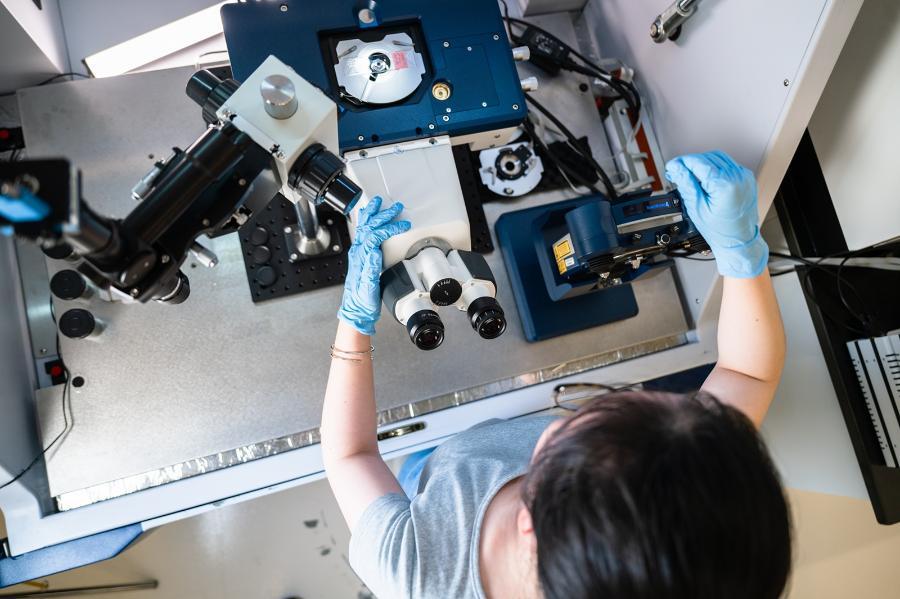
A student works with specialized precision equipment in a biomedical engineering lab.

Research in biomedical engineering at Florida Tech centers on developing innovative technologies and computational approaches to diagnose, monitor and treat human disease.

Current research efforts focus on cardiovascular and neurological systems, combining experimental and computational biomechanics, noninvasive monitoring, bioinstrumentation and machine learning.

Key areas include optimizing heart devices and blood flow, understanding soft tissue and cellular mechanics, advancing 3D bioprinting and organoid modeling, developing optical and imaging-based diagnostic tools, and creating portable neurotechnology devices.

This research emphasizes translational outcomes that improve patient care, enhance human performance and advance medical technology.

Learn more about Biomedical Engineering at Florida Tech on the Biomedical Engineering & Science website.

The Bioengineering and Sciences Building

The 61,000-square-foot Bioengineering and Sciences Building is home to Florida Tech’s biomedical engineering research and teaching facilities.

Doctoral students have access to over 20,000 square feet of labs for anatomy, orthopedics, tissue studies and computational simulations, featuring tools like atomic force microscopes, virtual dissection tables, tissue testers and prosthetics gait labs.

Collaborative spaces, an open-air courtyard and a three-story atrium provide an environment for focused research, interdisciplinary collaboration and innovation.
Loading...
Edit Page