MENU

What is Cell and Molecular Biology?

Get a Master's in Cell and Molecular Biology

The Cell and Molecular Biology Graduate Certificate

Earn an Ed.S. in Cell and Molecular Biology

The Ph.D. in Cell and Molecular Biology

Explore the molecular basis of life through research that advances scientific understanding.

In Florida Tech’s Ph.D. in cell and molecular biology, students investigate the molecular and cellular mechanisms underlying health, disease and biological function while developing deep expertise through original research and close faculty mentorship.

Through extensive laboratory research in areas such as live imaging, genome editing, protein biochemistry and high-throughput analysis, students build the technical depth and scholarly foundation needed to contribute new knowledge in medicine, biotechnology, regenerative therapies and related fields.

Tier 1
Best National University
U.S. News & World Report
Top 5.8%
World University Ranking
The Center for World University Rankings

Why Choose Florida Tech for Cell and Molecular Biology?

Florida Tech offers a research-intensive doctoral experience with access to advanced laboratories, high-end scientific instrumentation and mentorship from faculty investigating the molecular drivers of health and disease. Students work in a collaborative research environment, develop strong technical expertise and contribute to original scientific inquiry.

Faculty research spans neurodegeneration, synapse biology, proteasome regulation, vascular disease, genome variation, protein aggregation and plant molecular biology. Their work uses model organisms, computational tools and translational approaches to uncover molecular pathways, disease mechanisms and therapeutic targets.

Cell and molecular biology Ph.D. students work closely with these faculty mentors, developing the knowledge, technical skills and research experience needed for research careers in academia, industry, government laboratories and specialized scientific organizations.

Ph.D. students in cell and molecular biology have access to facilities designed for advanced, high-impact research.

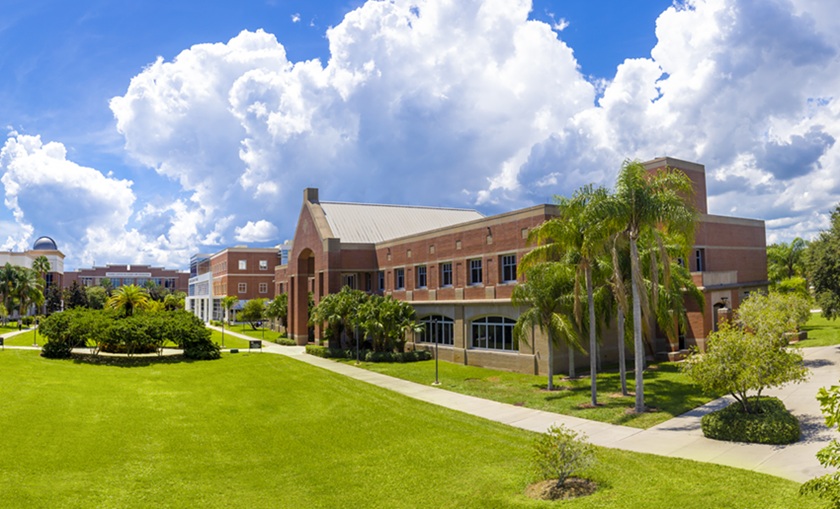
The F.W. Olin Life Sciences Building provides specialized laboratories for cellular and molecular biology, while the Bioengineering and Sciences Building offers over 20,000 square feet of modern classrooms and research space.

Labs are equipped for cell sorting, real-time PCR, fluorescence imaging, high-throughput biochemical assays and other core molecular biology techniques. The Center for High-Resolution Microscopy and Imaging supports detailed analysis of surfaces and cross-sections, enabling virtually any type of sample to be studied.

These resources provide the space, tools and infrastructure needed to pursue advanced, high-impact research in cell and molecular biology.

Florida Tech’s location in the heart of the Space Coast places cell and molecular biology Ph.D. students near a growing ecosystem of high-tech companies, research labs and government agencies. NASA-Kennedy Space Center and Cape Canaveral are just to the north.

This environment supports professional development through collaborations and research connections across biotechnology, biomedical science, environmental applications and related technical fields.

Academic units at Florida Tech may offer graduate student assistantships to full-time, degree-seeking graduate students on a competitive basis.

Teaching Assistants (TAs) support faculty in teaching undergraduate and graduate courses, including tasks such as grading, tutoring and conducting office hours. First-time TAs attend a teaching assistant seminar to prepare for their responsibilities.

Research Assistants (RAs) collaborate with faculty on projects funded by government agencies, private sponsors and university research funds.

For current information about assistantships, please contact the Department of Biomedical Engineering and Science.

Florida Tech offers a safe and welcoming campus environment that supports advanced research alongside personal well-being. The campus includes extensive green spaces, such as the Joy and Gordon Patterson Botanical Garden, along with facilities like the Holzer Health Center and Clemente Center for health, fitness and stress management.

Located minutes from the Indian River Lagoon and 72 miles of Atlantic beaches, the university combines access to outdoor recreation with proximity to industry and government organizations that contribute to research collaboration and career development.

Graduate students from around the world come together at Florida Tech in a campus community that fosters international collaboration and innovation. This environment encourages students to work across cultures and perspectives, preparing them for research and professional settings around the globe.

International Student and Scholar Services (ISSS) supports international students throughout their academic journey, providing guidance on immigration matters, serving as a liaison with sponsoring agencies and foreign governments, and sharing information about campus and community resources.

Careers in Cell and Molecular Biology

The Ph.D. in cell and molecular biology prepares graduates for advanced research and leadership roles in academia, government and industry. Alumni pursue careers directing research programs, contributing to federal and national laboratories and advancing scientific communication and policy.

Graduates may pursue roles such as:

  • College professor or academic researcher
  • Pharmaceutical or biotechnology research scientist
  • Research scientist or program lead in government laboratories
  • Scientific director or senior research manager
  • Scientific consultant
  • Scientific writer or editor

Note: Employment data reflect positions commonly associated with this field. Many Ph.D. graduates go on to academic, leadership and advanced research, technical and analytical roles not captured here.

Florida Tech Career Services helps students, alumni and employers connect through career planning, job search support and recruitment resources.

For information on job outlook, pay and working conditions in this field and related fields in the United States, see the Occupational Outlook Handbook from the U.S. Bureau of Labor Statistics.

Advanced Degree Options

Explore Doctoral Research

The dissertation is the centerpiece of the Ph.D., giving students the opportunity to advance both their expertise and the field of cell and molecular biology. 

Recent dissertation research in cell and molecular biology examines fundamental processes that control cellular function, stress responses and disease mechanisms. Studies focus on gene regulation, molecular pathways, cancer biology and cellular responses to environmental or chemical stimuli. This work provides insights into how cells adapt and respond, with applications for understanding disease and developing future therapies.

Browse recent dissertations in the Florida Tech Scholarship Repository.

Explore the Cell and Molecular Biology, Ph.D., Curriculum

The Cell and Molecular Biology, Ph.D., Curriculum

The Ph.D. in cell and molecular biology combines advanced coursework with sustained, original dissertation research.

Core courses provide foundational knowledge in cell and molecular biology and molecular genetics while electives explore advanced topics such as protein biotechnology, cell signaling, bioinformatics, genomics and proteomics, microbial growth, cancer biology and protein structure and function.

Students engage in dissertation research under faculty mentorship and may complete research rotations to gain experience across different labs. All students participate in a biological sciences seminar each semester, culminating in a presentation of their dissertation research in the final semester.

The Ph.D. program requires a minimum of 72 semester credit hours beyond the bachelor’s degree. Students entering with a master’s degree may transfer up to 30 credit hours if equivalent to program coursework requirements.

Check the catalog for a description of all courses. Check the catalog for detailed degree requirements.

Download the Cell and Molecular Biology, Ph.D., Curriculum now!

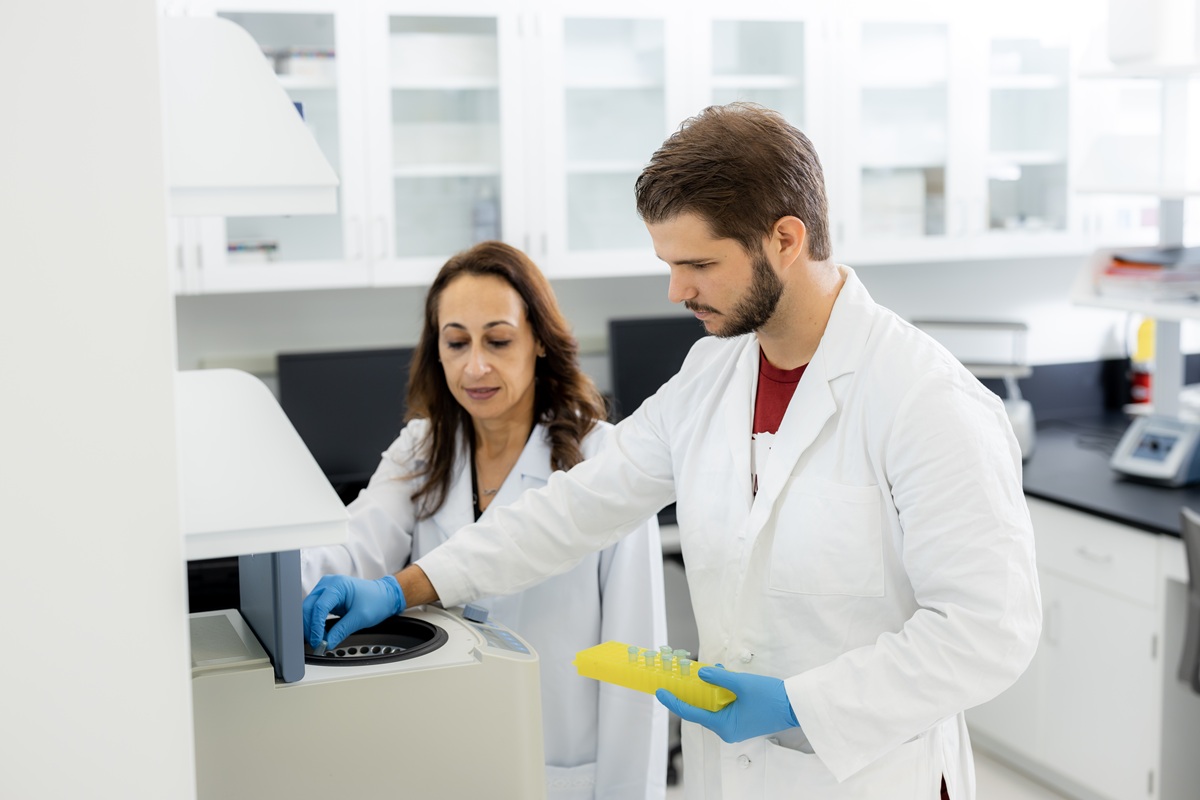
Dr. Nunes and student working with a centrifuge

Research in Cell and Molecular Biology

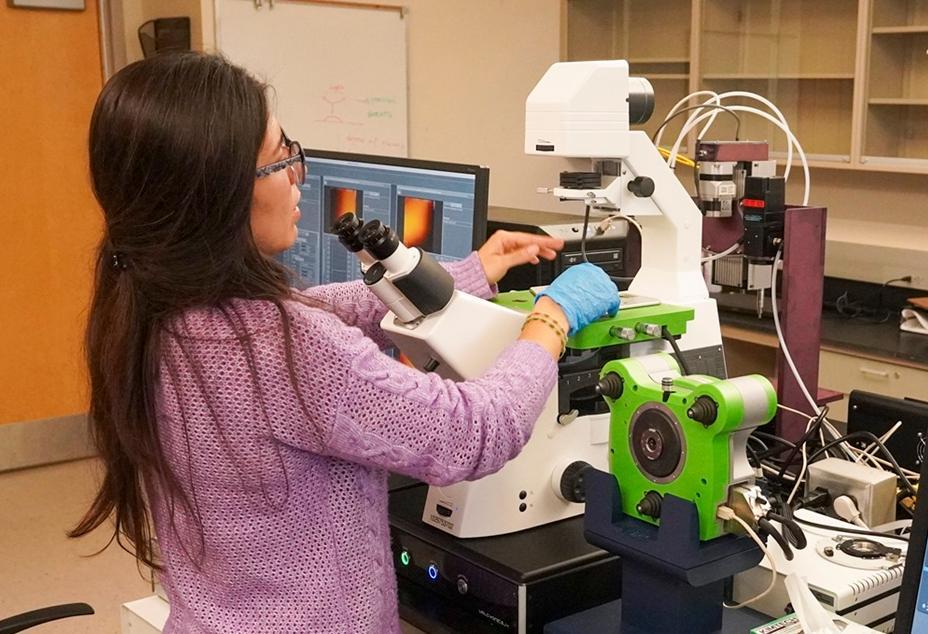
Graduate student using an atomic force microscope

Cell and molecular biology Ph.D. students contribute to faculty-led research that advances understanding of cellular processes and disease mechanisms. Areas of focus include:

Molecular Mechanisms of Disease & Therapeutics
Investigating proteasome regulation, neurodegeneration and vascular function to uncover novel drug targets and therapeutic strategies.

Microbial & Protein Biochemistry
Studying bacterial chromosome replication to develop new antimicrobials and examining amyloid fiber formation associated with disease.

Cell Signaling & Regulation
Exploring how the ubiquitin-proteasome system, autophagy and proteasome trafficking influence cellular health, cancer and neurodegenerative disorders.

Plant Molecular Biology & Biotechnology
Investigating plant-biotic interactions to enhance crop resilience, improve disease resistance and support sustainable agriculture.

Through sustained, faculty-mentored research, Ph.D. students develop advanced technical expertise while contributing discoveries that advance medicine, biotechnology and agriculture.

Learn more about Cell and Molecular Biology at Florida Tech on the Biomedical Engineering & Science website.

Life Sciences Research Facilities

The F.W. Olin Life Sciences Building is central to cell and molecular biology research at Florida Tech, with advanced teaching labs and dedicated research spaces for genetic engineering, cellular and molecular analysis, and high-precision experiments. It also houses the High-Resolution Microscopy & Advanced Imaging Center, supporting imaging from electron-level structure to live-cell visualization.

Just steps away, the Bioengineering and Sciences Building provides additional research space and access to state-of-the-art instrumentation for tissue studies, computational modeling and high-precision analysis, giving Ph.D. students the tools needed to pursue cutting-edge research.
Loading...
Edit Page