
MENU

What is Oceanography?

Get a Master's in Oceanography

The Oceanography Graduate Certificate

Earn an Ed.S. in Oceanography

The Ph.D. in Oceanography

Advance ocean science through original, interdisciplinary research.

Florida Tech’s Ph.D. in oceanography prepares researchers to study the physical, chemical and biological processes that shape ocean and coastal systems. Doctoral research examines topics such as ocean circulation and coastal dynamics, ocean–atmosphere interactions and biological responses to environmental change.

Students choose a specialization in biological, chemical, geological or physical oceanography, or coastal zone management, and develop a focused research program in close collaboration with faculty mentors.

Through hands-on research integrating fieldwork, laboratory experimentation and numerical modeling, students gain the independence and technical depth needed for careers in academia, government, industry or research institutions.

Tier 1
Best National University
U.S. News & World Report
Top 5.8%
World University Ranking
The Center for World University Rankings

Why Choose Florida Tech for Oceanography?

Florida Tech’s Space Coast location offers exceptional access to coastal ecosystems and one of the most active marine research regions in the U.S. Doctoral students benefit from close faculty mentorship, advanced laboratory and field opportunities and strong connections with government and industry partners. This environment supports ambitious research and prepares you for an impactful career.

Doctoral students at Florida Tech build interdisciplinary expertise in a research-intensive setting, with focused mentoring from faculty who are deeply involved in the field.

Small classes and research groups allow for close guidance as you develop and refine your dissertation research, while collaborative projects with professors and peers broaden your perspective and sharpen your scientific approach.

Coursework, access to specialized laboratories and extensive field-based training support your development as an independent researcher prepared to advance ocean science in real-world environments.

Florida Tech’s Space Coast location offers an exceptional environment for oceanographic research. With the Atlantic Ocean and the Indian River Lagoon nearby, doctoral students have direct access to a range of coastal and marine systems for intensive fieldwork and long-term data collection.

Proximity to miles of shoreline and active marine organizations supports applied research and professional experience with government agencies, environmental consulting firms, aquaculture operations, public aquaria and private research groups.

Being in a high-tech corridor encourages collaboration with scientists and engineers across related fields, enhancing both research opportunities and career prospects.

Research is the foundation of the Ph.D. in oceanography at Florida Tech. Doctoral students investigate complex physical, chemical and biological processes that shape ocean and coastal systems, working closely with faculty on topics such as ocean circulation, waves, coastal hydrodynamics, atmospheric-ocean interactions, remote sensing and plankton or benthic-pelagic dynamics.

Projects span deep-sea, coastal and estuarine environments and often integrate field measurements, laboratory experimentation and numerical modeling to explain how marine systems respond to natural variability and environmental change.

Ph.D. candidates conduct original dissertation research with the expectation of producing publishable work. This commitment to scientific rigor builds the expertise needed for advanced roles in research, academia, industry and government.

Florida Tech’s oceanography program is supported by specialized facilities that enable intensive research and hands-on scientific training.

Just minutes from campus, where Crane Creek meets the Indian River Lagoon, the Mertens Marine Center provides a base for fieldwork with on-site laboratories that allow samples to be processed shortly after collection. The Ralph S. Evinrude Marine Operations Center offers direct water access and supports projects ranging from shallow-water studies using small boats to offshore work conducted via chartered vessels.

On campus, doctoral students use laboratories in the F.W. Olin Physical Sciences and Life Sciences buildings, including the High-Resolution Microscopy and Advanced Imaging Center. The L3Harris Center for Science and Engineering houses aquaculture and marine biology labs that support controlled, small-scale experiments.

Together, these resources make it possible to conduct field-intensive research on coastal biology and ocean processes while strengthening collaboration with government agencies, nonprofits and industry partners.

Academic units at Florida Tech may offer graduate student assistantships to full-time, degree-seeking graduate students on a competitive basis.

Teaching Assistants (TAs) support faculty in teaching undergraduate and graduate courses, including tasks such as grading, tutoring and conducting office hours. First-time TAs attend a teaching assistant seminar to prepare for their responsibilities.

Research Assistants (RAs) collaborate with faculty on projects funded by government agencies, private sponsors and university research funds.

For current information about assistantships, please contact the Department of Ocean Engineering and Marine Sciences.

Florida Tech offers a safe and welcoming campus environment that supports advanced research alongside personal well-being. The campus includes extensive green spaces, such as the Joy and Gordon Patterson Botanical Garden, along with facilities like the Holzer Health Center and Clemente Center for health, fitness and stress management.

Located minutes from the Indian River Lagoon and 72 miles of Atlantic beaches, the university combines access to outdoor recreation with proximity to industry and government organizations that contribute to research collaboration and career development.

Graduate students from around the world come together at Florida Tech in a campus community that fosters international collaboration and innovation. This environment encourages students to work across cultures and perspectives, preparing them for research and professional settings around the globe.

International Student and Scholar Services (ISSS) supports international students throughout their academic journey, providing guidance on immigration matters, serving as a liaison with sponsoring agencies and foreign governments, and sharing information about campus and community resources.

Applicants with a bachelor’s or master’s degree in mathematics, natural science, engineering or a closely related field are eligible to apply to the Ph.D. in oceanography.

Admission decisions emphasize academic preparation and alignment between an applicant’s research interests and faculty expertise. An on-campus interview is strongly recommended, though not required, as it provides an opportunity to discuss research goals and program fit.

Students may be admitted in any semester. For optimal course sequencing and research planning, fall admission is preferred.

Prospective students are encouraged to review faculty profiles and research areas and may contact potential advisors to discuss research interests prior to applying.

Please see graduate admissions for full application requirements.

Careers in Oceanography

A Ph.D. in oceanography prepares graduates for leadership roles in marine science and environmental systems across government, industry and academia. Alumni are equipped to lead advanced research efforts, address complex scientific questions and contribute original knowledge that informs policy, management and innovation.

Career paths typically align with a student’s area of specialization and often involve interdisciplinary work. Graduates pursue roles such as:

  • Physical oceanographer
  • Marine scientist
  • Environmental scientist
  • Research scientist
  • Oceanographic data analyst
  • Fish ecologist
  • Coastal zone manager
  • Aquaculture specialist
  • Military oceanography specialist
  • College or university faculty
  • Research director or principal investigator

Florida Tech graduates pursue impactful careers worldwide as research scientists, coastal and oceanographic engineers, policy advisors and program leaders. Students have secured internships and professional positions with organizations such as:

  • Environmental consulting firms
  • Harbor Branch Oceanographic Institute
  • National Aeronautics and Space Administration (NASA)
  • National Oceanic and Atmospheric Administration (NOAA)
  • Smithsonian Institution
  • Florida Department of Environmental Protection
  • U.S. Environmental Protection Agency
  • U.S. Fish and Wildlife Service

Note: Employment data reflect positions commonly associated with this field. Many Ph.D. graduates go on to academic, leadership and advanced research, technical and analytical roles not captured here.

Florida Tech Career Services helps students, alumni and employers connect through career planning, job search support and recruitment resources.

For information on job outlook, pay and working conditions in this field and related fields in the United States, see the Occupational Outlook Handbook from the U.S. Bureau of Labor Statistics.

Advanced Degree Options

Explore Doctoral Research

The dissertation is the centerpiece of the Ph.D., providing students the opportunity to make original contributions to oceanography.

Doctoral research combines observational, experimental and computational approaches to study ocean circulation, coastal hydrodynamics, chemical and biological processes, remote sensing and atmosphere–ocean interactions. This training develops the independence, technical expertise and collaborative skills needed for advanced research roles in academia, industry or government.

Browse recent dissertations in the Florida Tech Scholarship Repository.

Explore the Oceanography, Ph.D., Curriculum

The Oceanography, Ph.D., Curriculum

The Ph.D. in oceanography is a research-focused degree designed to prepare students for independent scientific inquiry and leadership in marine science.

Students work closely with faculty to develop a personalized program of advanced coursework and original research that aligns with their interests, while also gaining a broad understanding of the field.

Areas of specialization include biological, chemical, geological or physical oceanography or coastal zone management.

Hands-on research is emphasized and culminates in the preparation and defense of a dissertation. Each candidate is expected to publish a major portion of the dissertation in refereed national or international journals.

The Ph.D. program requires 42 semester credit hours beyond a master’s degree.

Check the catalog for a description of all courses. Check the catalog for detailed degree requirements.

Download the Oceanography, Ph.D., Curriculum now!

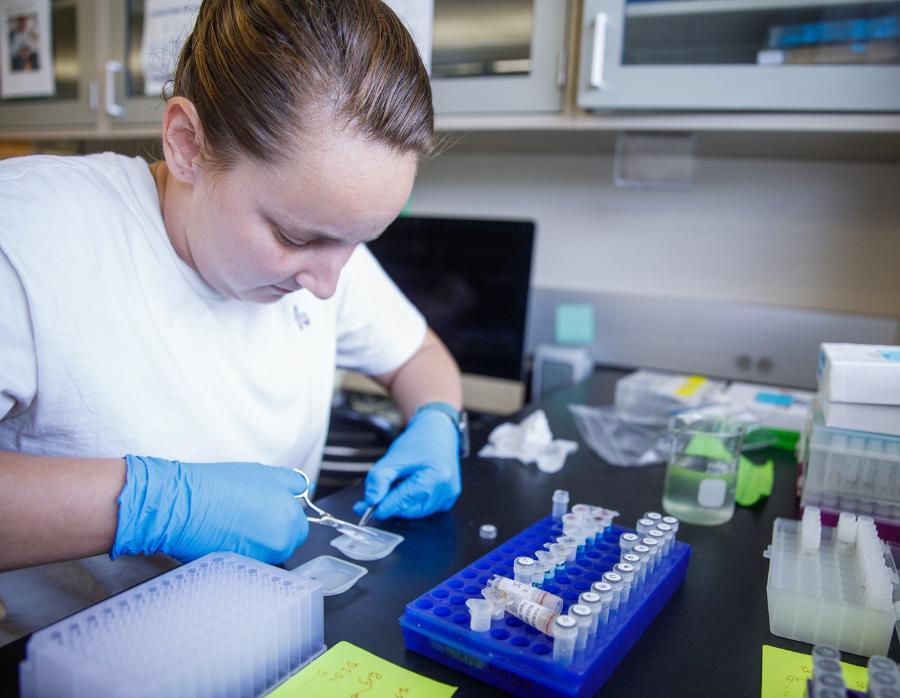
A student prepares samples for testing

Doctoral Specializations in Oceanography

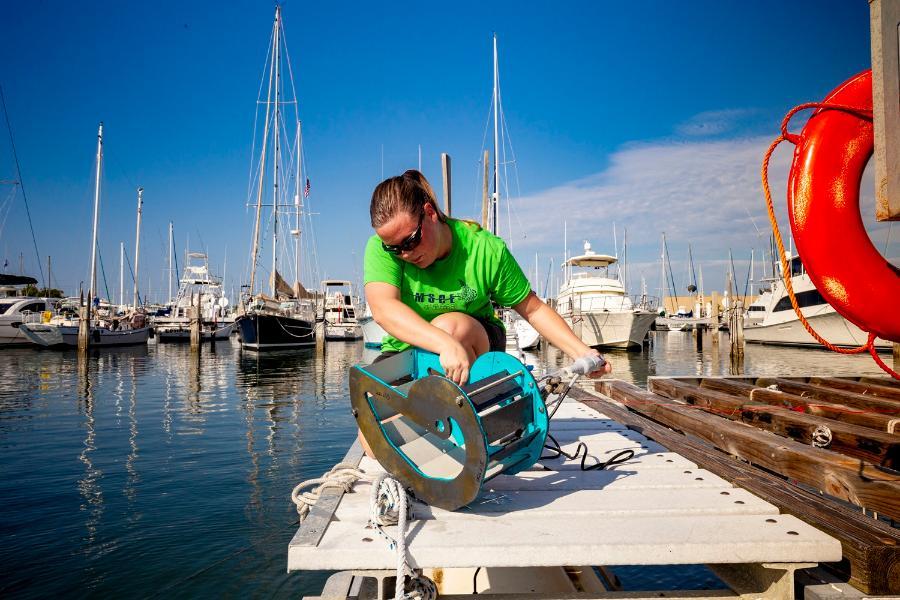
A student works with a conductivity, temperature, depth device that helps to assess specific conditions in the ocean.

The Ph.D. in oceanography lets you develop deep expertise in a selected area while building a broad foundation across oceanography. Doctoral research emphasizes original inquiry that contributes new knowledge to the field.

Biological Oceanography

Research investigates marine organisms and ecosystems, including phytoplankton, zooplankton, coral reefs, harmful algal blooms and estuarine restoration. Topics include ecological processes, species interactions and responses to environmental change.

Chemical Oceanography

Research focuses on marine pollutants, biogeochemical cycles and environmental chemistry, with an emphasis on understanding and mitigating human impacts on ocean systems.

Coastal Zone Management

Research examines human and natural influences on coastal environments, supporting evidence-based approaches to managing, protecting and restoring coastal systems and resources.

Geological Oceanography

Research explores ocean floor processes, sediment dynamics and coastal geology, including seafloor structure, erosion, deposition and marine geophysical systems.

Physical Oceanography

Research applies advanced mathematics, modeling and remote sensing to study ocean circulation, waves, currents, sea level, salinity and heat transport.

Learn more about Oceanography at Florida Tech on the Ocean Engineering and Marine Sciences website.

Waterfront Facilities for Advanced Research

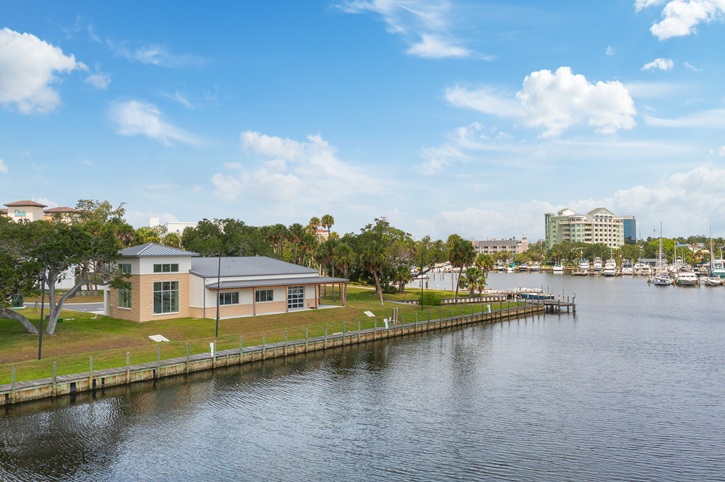
Just minutes from campus where Crane Creek meets the Indian River Lagoon, the Ralph S. Evinrude Marine Operations Center and Mertens Marine Center support a wide range of research projects.

Small outboard-powered boats and medium-sized workboats are available for shallow-water studies, with ocean-going vessels chartered for extended offshore research.

The Mertens Marine Center serves as a hub for doctoral research and advanced hands-on training. On-site laboratories allow samples to be processed immediately, supporting time-sensitive experiments and field-intensive studies.

Image: The Mertens Marine Center at the edge of the Atlantic Intracoastal Waterway. Photo credit: Pink Flamingo Photography, Jennifer Schumacher
Loading...
Edit Page