MENU

What is Civil Engineering?

Get a Master's in Civil Engineering

The Civil Engineering Graduate Certificate

Earn an Ed.S. in Civil Engineering

The Ph.D. in Civil Engineering

Advance knowledge and develop solutions for critical infrastructure systems through independent, dissertation-driven research.

Florida Tech’s civil engineering Ph.D. program allows students to pursue original research across key areas of the field, including construction management, environmental engineering, geotechnical engineering, structural engineering, transportation engineering and water resources engineering.

Students work closely with faculty mentors to design a personalized plan of study that aligns with their research interests, from experimental and computational investigations to field-based studies and applied infrastructure projects. Doctoral research is conducted in a collaborative, hands-on environment, with opportunities to contribute to publications, present findings at conferences and advance solutions to pressing challenges in civil and infrastructure systems.

Tier 1
Best National University
U.S. News & World Report
Top 5.8%
World University Ranking
The Center for World University Rankings

Why Choose Florida Tech for Civil Engineering?

At Florida Tech, doctoral students work closely with faculty mentors in a supportive research environment, building the expertise and practical experience needed for independent, original research. Their work addresses pressing civil and infrastructure challenges with global relevance, preparing graduates to advance knowledge and contribute solutions worldwide.

Ph.D. students in civil engineering at Florida Tech conduct research in a collaborative environment where close faculty mentorship and small research groups promote meaningful interaction and discovery.

Working alongside expert faculty, students pursue advanced, industry-relevant projects that deepen their expertise and drive innovation across the field.

The program emphasizes independent, solutions-focused research, preparing graduates to become leaders in academia, industry and government.

Florida Tech’s civil engineering faculty are professional engineers who combine extensive practical experience with active, high-impact research.

Their work spans wind and seismic engineering, risk modeling, hydraulic and environmental systems, transportation and geotechnical engineering, and construction management.

In the lab and in the field, faculty investigate real-world problems using advanced testing, data analytics, software development and modeling. Research topics include nanotechnology-enhanced materials, structural health monitoring, intelligent transportation systems and hydrologic modeling.

With backgrounds in consulting, military service and international projects, faculty bring global insight and practical perspective to doctoral study, mentoring students as they bridge theory, experimentation and application in their own research.

At Florida Tech, Ph.D. students have access to facilities and resources that support cutting-edge civil engineering research.

The materials and structures laboratory features universal testing machines for physical testing, along with instrumentation for experimental stress analysis. The soil mechanics laboratory includes commercial equipment for evaluating soil properties.

These resources give doctoral students the tools to investigate innovative solutions across materials, structures and geotechnical systems, enabling advanced experimentation and data-driven research.

Academic units at Florida Tech may offer graduate student assistantships to full-time, degree-seeking graduate students on a competitive basis.

Teaching Assistants (TAs) support faculty in teaching undergraduate and graduate courses, including tasks such as grading, tutoring and conducting office hours. First-time TAs attend a teaching assistant seminar to prepare for their responsibilities.

Research Assistants (RAs) collaborate with faculty on projects funded by government agencies, private sponsors and university research funds.

For current information about assistantships, please contact the Department of Mechanical and Civil Engineering.

Florida Tech’s location in a high-tech corridor provides unique advantages for civil engineering Ph.D. students. Our 130-acre campus is in the heart of Florida’s Space Coast, near NASA-Kennedy Space Center and a thriving high-tech workforce that includes leading corporations, government agencies and military organizations.

This proximity creates abundant opportunities for research collaborations, data access and professional engagement, connecting doctoral students to real-world projects and advanced infrastructure challenges.

Florida Tech offers a safe and welcoming campus environment that supports advanced research alongside personal well-being. The campus includes extensive green spaces, such as the Joy and Gordon Patterson Botanical Garden, along with facilities like the Holzer Health Center and Clemente Center for health, fitness and stress management.

Located minutes from the Indian River Lagoon and 72 miles of Atlantic beaches, the university combines access to outdoor recreation with proximity to industry and government organizations that contribute to research collaboration and career development.

Graduate students from around the world come together at Florida Tech in a campus community that fosters international collaboration and innovation. This environment encourages students to work across cultures and perspectives, preparing them for research and professional settings around the globe.

International Student and Scholar Services (ISSS) supports international students throughout their academic journey, providing guidance on immigration matters, serving as a liaison with sponsoring agencies and foreign governments, and sharing information about campus and community resources.

We invite applicants with a master’s degree from an accredited institution that provides strong preparation for doctoral-level work in civil engineering.

Prospective students are encouraged to explore ongoing civil engineering research and identify faculty whose work aligns with their interests. Reaching out to faculty before arriving is a great way to begin building connections and envision your path as a doctoral researcher at Florida Tech.

Please see our graduate admission requirements for more information about applying and admission.

Careers in Civil Engineering

Graduates with a Ph.D. in civil engineering are prepared for advanced roles in research, leadership and innovation across academia, industry and government.

Career paths include:

  • University faculty or researcher – leading studies in your area of expertise
  • Senior research engineer or scientist – in private industry, government agencies or national laboratories
  • Consulting engineer – specializing in advanced modeling, materials or infrastructure resilience
  • Engineering manager or technical director – overseeing large-scale design or construction projects
  • Policy or program analyst – advising government or international organizations on infrastructure and environmental systems

Many Ph.D. graduates also pursue entrepreneurship or leadership roles in technology development, sustainability and infrastructure innovation.

Note: Employment data reflect positions commonly associated with this field. Many Ph.D. graduates go on to academic, leadership and advanced research, technical and analytical roles not captured here.

Florida Tech Career Services helps students, alumni and employers connect through career planning, job search support and recruitment resources.

For information on job outlook, pay and working conditions in this field and related fields in the United States, see the Occupational Outlook Handbook from the U.S. Bureau of Labor Statistics.

Advanced Degree Options

Explore Doctoral Research

Research and dissertation work form the core of the civil engineering doctoral experience at Florida Tech, shaping both academic growth and professional expertise.

Ph.D. projects tackle pressing challenges in infrastructure and the environment, including climate resilience, sustainability and the use of digital or immersive technologies to improve planning, safety and decision-making.

From modeling climate impacts on critical systems to integrating augmented reality into urban design, doctoral students advance the field through data-driven, innovative research that helps make communities more resilient and adaptive.

Browse recent dissertations in the Florida Tech Scholarship Repository.

Explore the Civil Engineering, Ph.D., Curriculum

The Civil Engineering, Ph.D., Curriculum

The Ph.D. in civil engineering is designed for students ready to advance their research expertise through independent investigation and the creation of new knowledge in a specialized area.

Doctoral students work closely with an advisory committee to develop an individualized, approved plan of study and pursue advanced coursework that supports their research focus.

Courses may be drawn from civil, aerospace, chemical, mechanical or ocean engineering, as well as related fields such as environmental science, oceanography, mathematics, operations research and computer science.

Studies culminate in a significant original research project, the presentation of results and a written dissertation demonstrating a contribution to the field.

The program requires a minimum of 42 credits beyond a master’s degree.

Check the catalog for a description of all courses. Check the catalog for detailed degree requirements.

Download the Civil Engineering, Ph.D., Curriculum now!

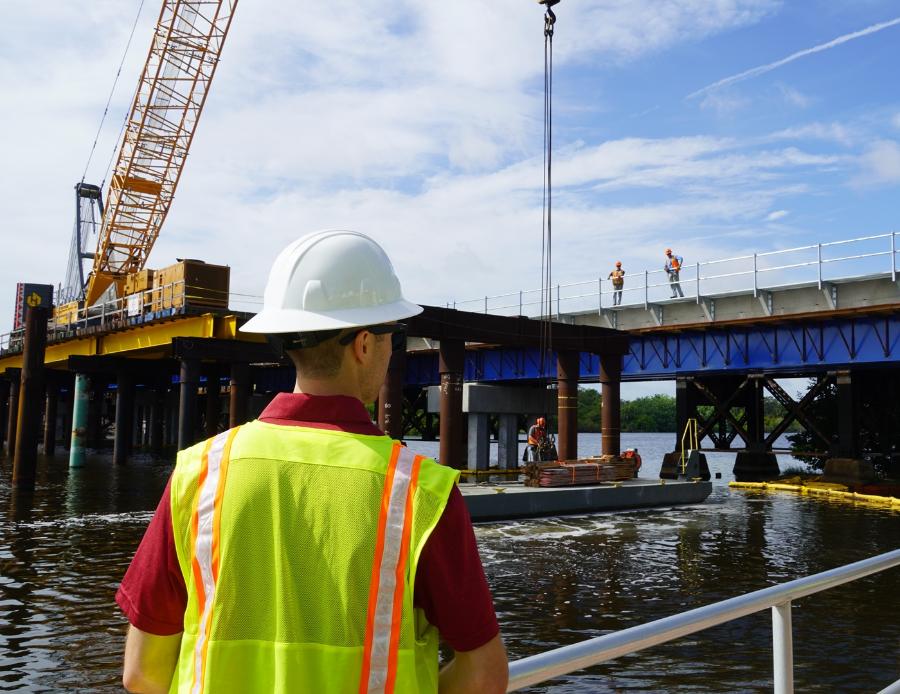
A bridge inspection during the construction of a new train line through Melbourne

Outstanding Research Opportunities

Civil engineering Ph.D. students at Florida Tech conduct cutting-edge research across materials, structures, geotechnical systems, transportation, water resources and more.

Projects include nanotechnology-enhanced concrete, seismic and wind resilience, sustainable transportation networks and groundwater modeling.

Many are supported by state, federal and international agencies, equipping students to develop innovative solutions to complex engineering challenges.

Research opportunities extend beyond the department through partnerships with organizations such as:

  • National Science Foundation
  • FEMA
  • Florida Department of Transportation
  • St. Johns River Water Management District
  • Florida Sea Grant

Civil Engineering Advisory Committee members from industry and government connect students to practical projects and professional networks.

Ph.D. students benefit from a highly collaborative environment, working closely with faculty, peers and interdisciplinary teams to advance their research and professional expertise.

Prospective students are encouraged to explore Florida Tech’s research centers, laboratories and faculty profiles, and to reach out directly to faculty or the department to discuss potential research directions and collaborations.

Learn more about Civil Engineering at Florida Tech on the Mechanical and Civil Engineering website.

State-of-the-Art Engineering Spaces

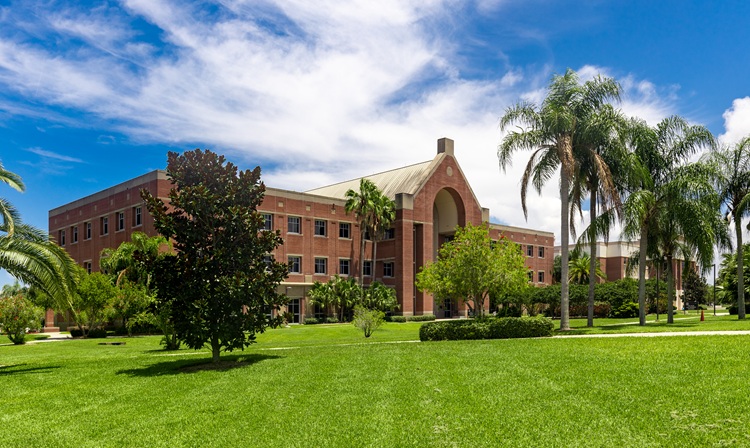
Ph.D. students in civil engineering conduct research in the spacious, three-level F.W. Olin Engineering Complex, home to the Department of Mechanical and Civil Engineering.

Beyond offices and classrooms, the building houses 26 specialized research and teaching laboratories, including facilities for geomaterials, robotics and magnetic levitation.

A 142-seat multimedia auditorium and collaborative spaces support seminars, presentations and cross-disciplinary research, fostering innovation, experimentation and advanced learning throughout doctoral studies.
Loading...
Edit Page