MENU

What is Electrical Engineering?

Get a Master's in Electrical Engineering

The Electrical Engineering Graduate Certificate

Earn an Ed.S. in Electrical Engineering

The Ph.D. in Electrical Engineering

Advance the frontiers of electrical engineering.

Florida Tech’s Ph.D. in electrical engineering prepares students to conduct original, independent research under close faculty mentorship. Doctoral students work with advisors to develop a focused research agenda and plan of study within an interdisciplinary research environment.

Research areas include wireless communications, photonics and optical systems, antennas and electromagnetics, and RF and analog integrated circuit design, integrating theory, computation and hands-on investigation.

Graduates develop the technical depth and research independence needed for advanced research and technical leadership roles in academia, industry or government research.

Tier 1
Best National University
U.S. News & World Report
Top 5.8%
World University Ranking
The Center for World University Rankings

Why Choose Florida Tech for Electrical Engineering?

Florida Tech offers a research-intensive environment where Ph.D. students engage in sustained doctoral research supported by strong laboratory infrastructure and close faculty mentorship. Students contribute to projects that connect theory with application, developing the rigor, independence and perspective expected of researchers working at an international level.

Ph.D. students in electrical engineering work closely with faculty conducting cutting-edge research in communications, network security, optics and photonics, electromagnetics and signal processing.

Faculty provide individualized mentorship on dissertation planning, research methods and emerging directions, supporting students in developing the depth, technical expertise and independence required to make original contributions to the field.

Florida Tech provides a research-intensive environment where Ph.D. students work closely with faculty on projects spanning electrical engineering, computer science and the physical sciences.

Research groups emphasize rigorous methodology, systematic inquiry and steady progress toward original, publishable results.

Students collaborate across disciplines on challenges in communications, sensing, computing and integrated systems, gaining hands-on experience with advanced laboratory capabilities and theoretical frameworks.

Academic units at Florida Tech may offer graduate student assistantships to full-time, degree-seeking graduate students on a competitive basis.

Teaching Assistants (TAs) support faculty in teaching undergraduate and graduate courses, including tasks such as grading, tutoring and conducting office hours. First-time TAs attend a teaching assistant seminar to prepare for their responsibilities.

Research Assistants (RAs) collaborate with faculty on projects funded by government agencies, private sponsors and university research funds.

For current information about assistantships, please contact the Department of Electrical Engineering and Computer Science.

Florida Tech’s location in a high-tech corridor makes it an ideal setting for doctoral research in electrical engineering.

Brevard County hosts one of the largest high-tech workforces in the country, offering opportunities for collaborations and employment in aerospace, communications, defense and electronics.

Our 130-acre campus is in the heart of the Space Coast, just south of NASA-Kennedy Space Center, placing students near leading-edge research and industry projects that connect directly to advanced electrical engineering work.

Florida Tech offers a safe and welcoming campus environment that supports advanced research alongside personal well-being. The campus includes extensive green spaces, such as the Joy and Gordon Patterson Botanical Garden, along with facilities like the Holzer Health Center and Clemente Center for health, fitness and stress management.

Located minutes from the Indian River Lagoon and 72 miles of Atlantic beaches, the university combines access to outdoor recreation with proximity to industry and government organizations that contribute to research collaboration and career development.

Graduate students from around the world come together at Florida Tech in a campus community that fosters international collaboration and innovation. This environment encourages students to work across cultures and perspectives, preparing them for research and professional settings around the globe.

International Student and Scholar Services (ISSS) supports international students throughout their academic journey, providing guidance on immigration matters, serving as a liaison with sponsoring agencies and foreign governments, and sharing information about campus and community resources.

The Ph.D. in electrical engineering is designed for students ready to advance the field through original research, develop innovative solutions to complex engineering challenges and pursue careers in academia, industry or government research.

Applicants should hold a master’s degree in electrical engineering or a related field from an accredited institution, or from an international institution with preparation suitable for doctoral-level study.

For more information, please see our graduate admission requirements.

Careers in Electrical Engineering

Graduates of the Ph.D. in electrical engineering develop advanced technical expertise and deep research experience, preparing them to address complex engineering problems and lead research in academia, industry or government.

Ph.D. graduates are sought after across sectors including aerospace, defense, energy, electronics, medical technology and communications. Florida Tech alumni have pursued research and leadership roles at organizations such as L3Harris Technologies, IBM, Lockheed Martin, Microsoft, Collins Aerospace and the Florida Solar Energy Center.

With expertise spanning areas such as signal processing, communications, photonics, embedded and cyber-physical systems, power and energy systems, and autonomous technologies, graduates pursue roles including:

  • Research scientist or principal investigator
  • R&D or systems engineer
  • AI/ML systems engineer
  • Embedded or cyber-physical systems developer
  • Signal processing or communications engineer
  • Power systems or smart grid engineer
  • Photonics or optical systems researcher
  • Autonomous systems or avionics engineer
  • University faculty

Note: Employment data reflect positions commonly associated with this field. Many Ph.D. graduates go on to academic, leadership and advanced research, technical and analytical roles not captured here.

Florida Tech Career Services helps students, alumni and employers connect through career planning, job search support and recruitment resources.

For information on job outlook, pay and working conditions in this field and related fields in the United States, see the Occupational Outlook Handbook from the U.S. Bureau of Labor Statistics.

Advanced Degree Options

Explore Doctoral Research

Research and the dissertation form the core of the doctoral experience, shaping both scholarly development and professional expertise.

Doctoral dissertations in electrical engineering address areas such as communications, networks, signal processing, embedded systems and robotics, with research spanning wireless and optical systems, advanced signal analysis and autonomous and embedded technologies. Foundational work in algorithms and theory supports the development of efficient, scalable and reliable engineering solutions.

Browse recent dissertations in the Florida Tech Scholarship Repository.

Explore the Electrical Engineering, Ph.D., Curriculum

The Electrical Engineering, Ph.D., Curriculum

The Ph.D. in electrical engineering at Florida Tech centers on original research that contributes new knowledge to the field.

The program integrates advanced coursework with hands-on research, culminating in a dissertation. Faculty advisors work closely with students to design a personalized plan of study, with flexibility to explore emerging areas in electrical engineering and related disciplines.

Doctoral students present their research in annual seminars, and publication in professional journals or conference proceedings is required, ensuring that their work reaches academic and professional audiences worldwide.

The Ph.D. requires a minimum of 48 credit hours beyond a master’s degree, including both coursework and research.

Check the catalog for a description of all courses. Check the catalog for detailed degree requirements.

Download the Electrical Engineering, Ph.D., Curriculum now!

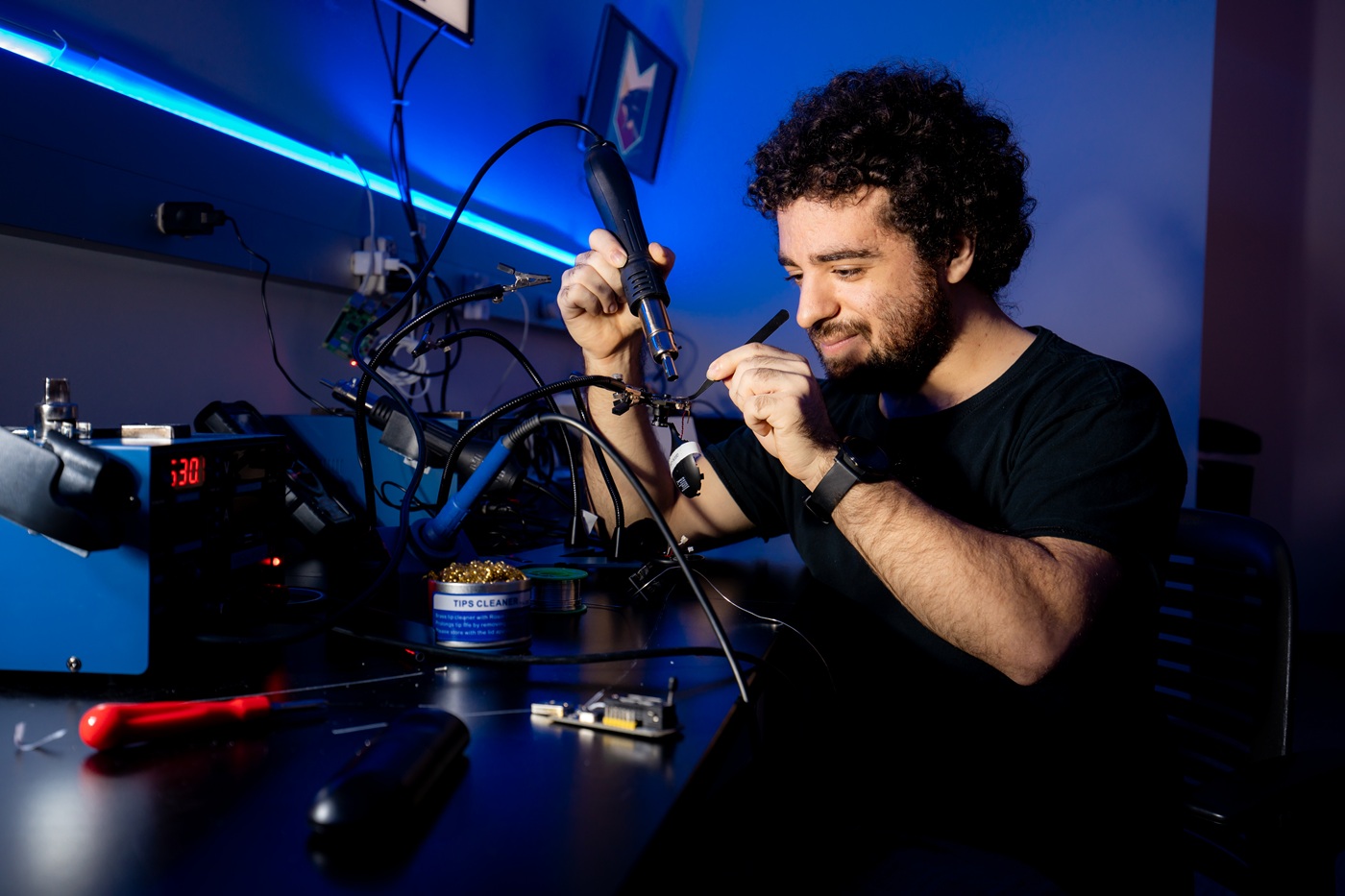
A student soldering in the IoT lab

Electrical Engineering Research: From Theory to Practice

Electrical engineering research at Florida Tech integrates foundational theory with advanced computational and experimental methods. Doctoral research spans a range of established and emerging areas, including:

  • Wireless and mobile communication
  • Optical systems and photonics
  • Antennas and electromagnetics
  • RF and analog/mixed-signal integrated circuit design
  • Microelectronics modeling

Data-driven methods and advanced computational approaches support research across signal processing, communications, photonics and electronic devices, with applications in sensing, imaging, integrated circuits, embedded systems and wireless networks.

The Wireless Center of Excellence

The Wireless Center of Excellence (WiCE) serves as a research hub for fundamental and applied doctoral research in wireless communication, sensor networks and emerging large-scale networked systems.

WiCE provides access to specialized laboratories supporting computational and experimental research, including the design, simulation and analysis of wireless systems using advanced circuit, electromagnetic and signal-processing tools.

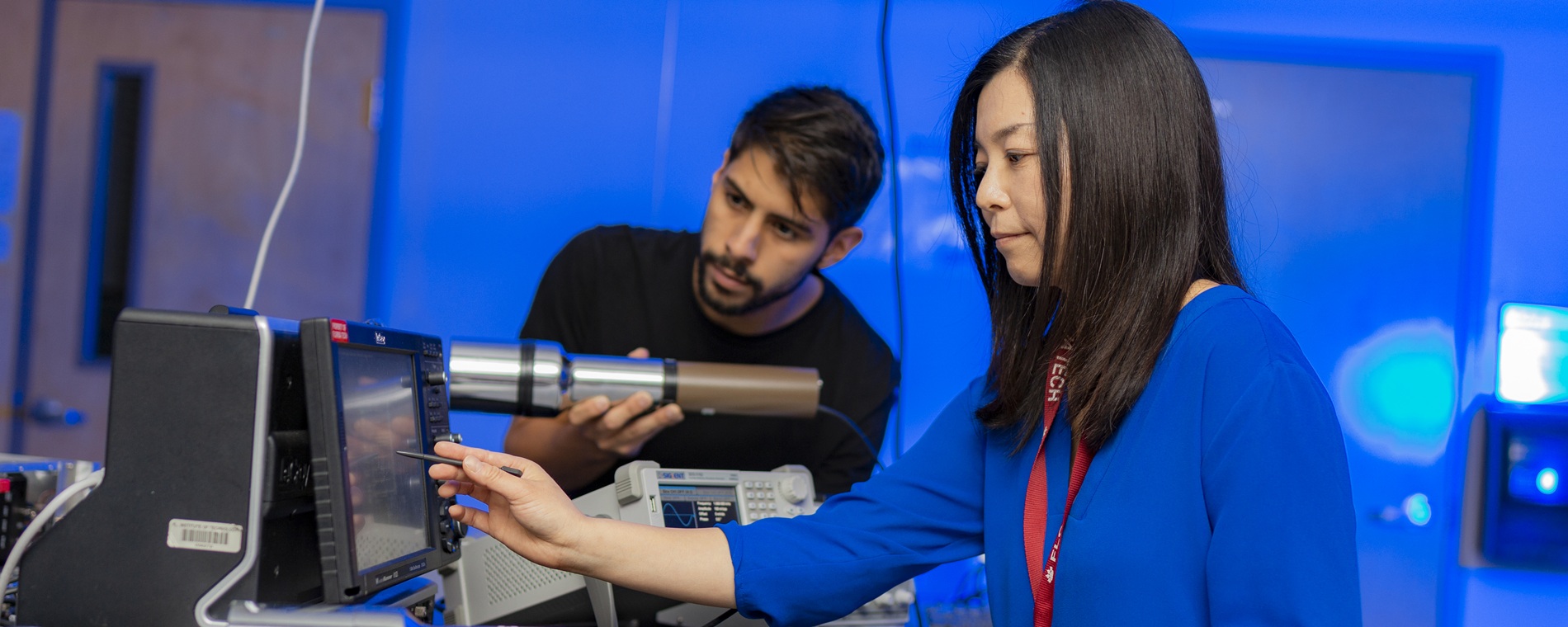
The Microwave Research Lab enables experimental validation of doctoral research using microwave hardware and measurement systems, including an anechoic chamber, shielded testing room and instrumentation for antenna, circuit and wireless device characterization.

Learn more about Electrical Engineering at Florida Tech on the Electrical Engineering and Computer Science website.

Loading...
Edit Page