2025 Year-End Newsletter
Chair’s Message
This year, we are delighted to welcome four new members to the Biomedical Engineering and Science (BES) community— Ms. Valerie Sheppeard-Hankins, Dr. Michelle Cherne, Dr. Anthony El-Khouri (M.D.), and Dr. Mohammad Ahmed. Each brings unique expertise that strengthens our department’s integration of engineering, biology, and medicine.
Our department continues to push boundaries in understanding, diagnosing, and treating human disease. From uncovering molecular mechanisms of neurodegeneration to developing AI-powered wearable devices and launching courses that unite clinicians and engineers, BES faculty and students exemplify our mission: to translate engineering into healing.
This year, BES faculty collectively secured 7 external grants and published 51 articles in top-tier journals such as Environmental Science & Technology, IEEE Reviews in Biomedical Engineering, New Phytologist, and Computers in Biology and Medicine, with impact factors of up to 12.
We are proud of the accomplishments of our community and grateful for your continued support.

Warm regards,
Linxia Gu, Ph.D., ASME Fellow
Professor and Department Head
Department of Biomedical Engineering and Science
College of Engineering and Science
Unraveling the Role of PHR Signaling in Neurodegeneration
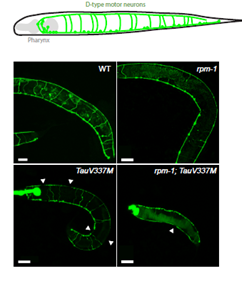
Tauopathies are neurodegenerative diseases marked by the misfolding and aggregation of the Tau protein, leading to synaptic dysfunction and neuronal loss. Dr. Melissa Borgen’s lab is using C. elegans models to map the genetic and molecular pathways that drive these processes.
Her team discovered a new pro-degenerative role of RPM-1/Phr1/MycBP2 in Tau-mediated neuronal damage. This NIH-funded research has identified three downstream pathways influencing degeneration, with key contributions from graduate students Xinxing Ding, Aidan Anderson, and Evan Landreth. Their findings promise to shed light on the early mechanisms of neurodegeneration and open new avenues for therapeutic intervention.
Image – Top: Diagram of worm motor cord, green denotes GABAergic motor neurons. Bottom: Representative images of each genotype. Wild-type worms have fully intact motor cords, shown by GFP coverage along the length of the animal. rpm-1 mutant motor cords are also intact. The tauopathy model (TauV337M) induces “breaks” in the GFP (white arrowheads), indicating degeneration of axons or neurons in the motor cord. When rpm-1 is knocked out in the Tau model, there are fewer breaks.
Advancing Non-Invasive Biosensing for Cardiac and Pain Monitoring
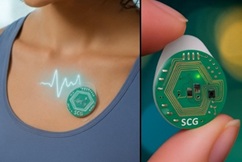
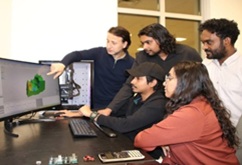
The Wearable Instruments and Sensing Laboratory (WISe Lab), led by Drs. Mehmet Kaya and Peshala Gamage, is advancing wearable health technology through two NIH-funded projects focused on cardiovascular and pain monitoring.
The first project is developing a wearable, machine-learning-based system to estimate heart function —such as ejection fraction and stroke volume—using subtle 3D chest vibrations. In collaboration with Mayo Clinic cardiologists, this innovation could transform heart failure monitoring beyond clinical settings.
In partnership with industry through an NIH STTR grant, the WISe Lab is also developing Pain Vitals, a chest-worn AI-powered biosensor providing an objective measure of pain to improve dosing precision and patient safety. Together, these projects highlight Florida Tech’s growing leadership in translational biomedical innovation.
Images – Top: Seismocardiography-based Wearable Sensor Design for Cardiac Monitoring. Bottom: WISe Lab Team discussing Chest Motion Simulation Results.
From Classroom to Clinic: Senior Design and MedTech Innovations
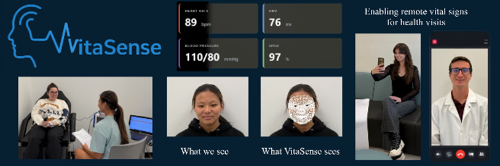
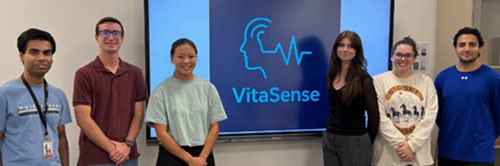
BES offers project-driven courses—Senior Design and MedTech Innovations—that bridge engineering and medicine through direct clinician-student collaboration. Students work alongside physicians to design and prototype real-world medical technologies.
One team, mentored by Drs. Sujoy Ghosh Hajra and Mohamad Ahmed, is developing a contactless vital sign monitoring system that uses skin-reflected light to measure heart rate, heart rate variability, blood pressure, and SpO₂. Another project, guided by Dr. Sexton of Brevard Hyperbaric and Southern Aeromedical Institute, created a non-invasive hypoxia monitoring system for clinical and aviation applications.
These courses equip students with both technical and clinical insight, preparing them to become the next generation of medical technology innovators.
New Faculty Welcome
We are thrilled to welcome these outstanding scholars to our BES family:
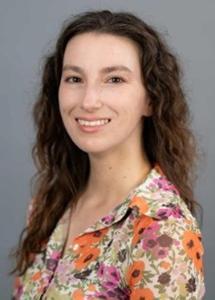
Dr. Michelle Cherne, Assistant Professor, returns to her hometown of Melbourne after postdoctoral research at Montana State University. Her research explores how the gastrointestinal extracellular matrix influences epithelial and immune cell function, particularly in response to Helicobacter pylori.
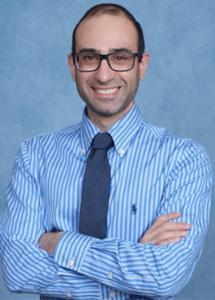
Dr. Anthony El-Khouri (M.D.), Assistant Professor, brings medical training from St. George’s University and research interests spanning marine microbiology, infectious disease, and drug discovery. His teaching bridges clinical insight with biomedical applications.

Dr. Mohammad Ahmed, Visiting Instructor, has research interests in wearable sensor systems for real-time stress and performance monitoring. He currently teaches Biofluids, Biomedical Engineering Analysis I, and Senior Design, mentoring students in developing industry-ready healthcare technologies.
Student & Alumni Highlights
We proudly celebrate the achievements of our students and alumni:
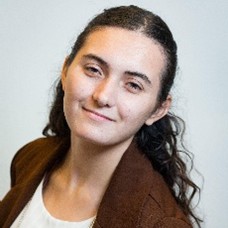
Electra Scarpignato (B.S. ’24) was awarded the prestigious Universities Research Association (URA) Summer Fellowship at Sandia National Laboratories, where she contributed to the rapid testing of biological therapeutics.
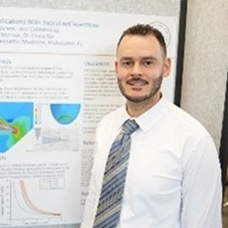
Cristobal Cabrera, a medical student at Burrell College of Osteopathic Medicine mentored by Jose Colmenarez, won the Student Poster Award at the 2025 Medical Student Research Day for his project, “Unveiling Potential Complications with Subretinal Injections.”
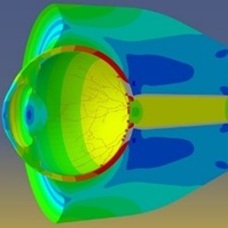
Ph.D. candidate Jose Colmenarez was featured in Florida Tech News for his computational modeling of newborn retinal hemorrhaging, bridging ophthalmology and biomechanics.
Student Club Highlights
Pre-Med Club
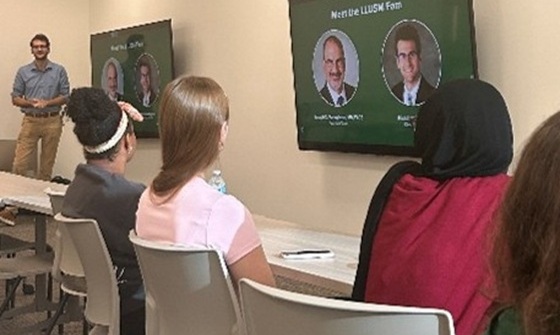
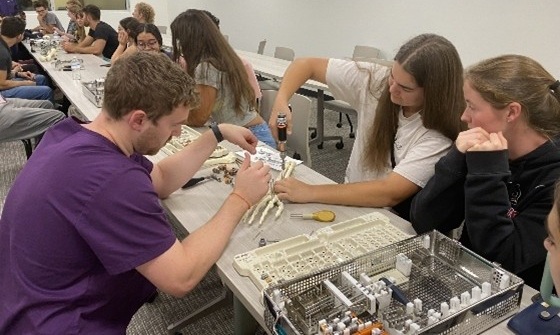
The Florida Tech Pre-Med Club welcomes Dr. Anthony El-Khouri (M.D.) as a new co-advisor. This year, the club hosted engaging talks by healthcare professionals, including the Director of Surgery at AdventHealth Orlando, who provided students with firsthand perspectives on clinical practice and pathways to medical school.
BMES Student Chapter
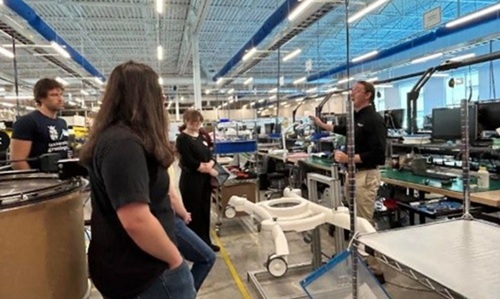
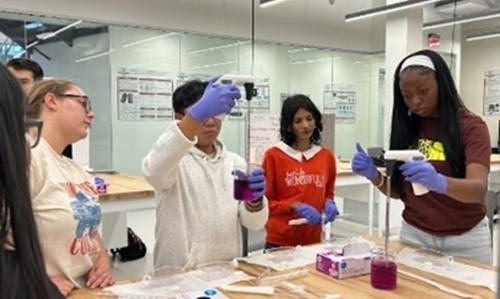
The Florida Tech Chapter of BMES supported nine students in attending the BMES Annual Meeting, where six presented their research. The chapter expanded hands-on and clinical learning opportunities through a Cell Culture Workshop and a new collaboration with the Burrell College of Osteopathic Medicine. Community engagement also grew through monthly meetings, successful local fundraisers, and active social media outreach that connects members with valuable professional opportunities.
Together, these student-led initiatives continue to foster our students’ commitment to healthcare, service, and leadership.
Past Highlights
Dear Students and Colleagues,
It is a pleasure to introduce this year’s newsletter from the Department of Biomedical Engineering and Science (BES) at Florida Tech, home to two dynamic programs: Biomedical Engineering (BME) and Biomedical Science (BMS). This past year has been marked by growth and innovation as we push forward in education and research across diverse biomedical fields.
We are excited to welcome new members to the BES community. Dr. Timothy Crombie joins us with expertise in quantitative genetics, population genomics, and molecular ecology, while our Provost, Dr. John Z. Kiss, brings active research in the gravitational and space biology of plants. His contributions add to our interdisciplinary strengths and commitment to pioneering research.
Our faculty has established four major research clusters: Cell and Molecular Biology, Bioinstrumentation, Biomechanics, and Health Digital Twins. With these clusters, our research spans key areas such as neural engineering, neuroscience, medical devices, cardiovascular physiology, traumatic injury, imaging/AI, biomaterials, tissue engineering, dental implants, joint functions, and cellular, molecular, and genetic markers.
This year, our faculty and students celebrated many accomplishments. Dr. Careesa Liu’s research on blinking and brain health was feathered in an article titled “In the Blink of an Eye: What Blinking Can Reveal About Brain Health.” Dr. Kunal Mitra received recognition for his work with the C-STARS space manufacturing consortium, a partnership among Florida Tech, UF, Embry-Riddle, and Florida A&M. Senior biomedical engineering student Griffin Martin was spotlighted in “Quiet Strength: Men’s Lacrosse Team Supports Hearing-Impaired Teammates,” demonstrating the broader impact of our students. Our BME senior capstone project, “StrabiSense: A Novel Force Sensor for Strabismus Surgery,” won the prestigious President’s Cup for Engineering.
Our department remains committed to integrating engineering and science, breaking new ground in the biomedical field. We are proud of the hard work and achievements of our faculty, students, and the broader bioengineering community. Thank you for your continued support, and we look forward to sharing more of our journey with you.
Warm regards,
Linxia Gu, Ph.D., ASME Fellow
Professor and Department Head
Department of Biomedical Engineering and Science
College of Engineering and Science
BES Welcomes Two New Faculty Members
Dr. John Z. Kiss joined Florida Tech as its provost and senior vice president of academic affairs, as well as BES professor, on May 1, bringing extensive experience in academic leadership and plant biology research. Dr. Kiss is widely recognized for his research in gravitational and space biology of plants, with 128 peer-reviewed publications, and numerous invited seminars presented across the U.S. and 14 other countries.
Dr. Kiss has served as principal investigator on grants from NASA, the USDA, NSF and NIH. He has led eight spaceflight experiments on the Space Shuttle and the International Space Station. His contributions to space biology earned him the NASA Outstanding Public Leadership Medal in 2014, and in 2021, he was awarded the International Cooperation Medal from the Committee on Space Research (COSPAR) and asteroid Kiss 8267 was named in his honor.
Before his arrival at Florida Tech, Dr. Kiss served as the Dean of the College of Arts and Sciences and a Professor of Biology at the University of North Carolina Greensboro since 2016. Dr. Kiss served as dean of the Graduate School at the University of Mississippi from 2012-16. He was on the faculty of Miami University from 1993 to 2012 where he was a university distinguished professor and chair of the Botany Department. He holds a B.S. in biology from Georgetown University and a Ph.D. in botany and plant physiology from Rutgers University.
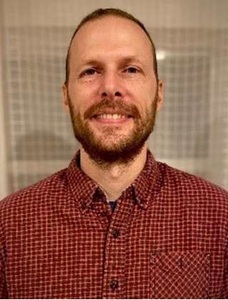
Dr. Timothy Crombie joined the Department of Biomedical Engineering and Science as an assistant professor, bringing expertise in genetics and molecular biology. He earned his Ph.D. in Biology from the University of Florida in 2015, focusing on the crosstalk among molecular stress response pathways. During his postdoctoral work at Northwestern University, Dr. Crombie studied population genetics using the C. elegans model and examined how natural genetic variation influences responses to environmental factors.
At Florida Tech, Dr. Crombie’s research focuses on understanding how natural genetic variants contribute to environmental toxicant susceptibilities, with the ultimate goal of applying these findings to human health through studies with human cell lines. He is also branching into research on natural variation in pharmaceutical responses and is developing C. elegans as a model organism to study mild traumatic brain injury.
Spotlight on Current Faculty
Dr. Venkat Keshav Chivukula and his collaborators have been awarded an NIH R01 grant for the project titled “Beyond Urea Kinetics: Balancing Tradeoffs in Dialyzer Design for the Next 50 Years.”
Dr. Melissa Borgen has received an NIH R15 grant for her project titled “The role of PHR signaling in tauopathy-related neurodegeneration.” Additionally, Dr. Borgen was appointed as Medical Sciences chair for the Florida Academy of Science.
Dr. Sujoy Ghosh Hajra has been awarded a grant from the Florida Space Grant Consortium (FSGC) for his project titled “Using blink-related brain and heart activity for improved astronaut cognitive state monitoring.”
Dr. Kunal Mitra serves as a co-PI within the C-STARS space research consortium, focusing on space biomanufacturing. His role centers on developing 3D bioprinted vascularized tissues for both space and Earth-based applications.
Dr. Careesa Liu’s research on studying blink-related oscillations was featured in Florida Tech Magazine. Her work highlights the significance of blink patterns in understanding brain function, bridging fields of neuroengineering and cognitive health.
Dr. Peshala Gamage led the organization of two College of Engineering and Science dodgeball teams, fostering a sense of teamwork and community among students and faculty. One of the teams achieved the third-place finish.
Dr. Tristan Fiedler leads the integration of BES seminars across science and engineering fields, actively enhancing interdisciplinary learning for students
Celebrating Our Students
Graduate students Britney Ming and Lexine Sibert-Jolissaint were awarded the prestigious NIH National Institute of Biomedical Imaging and and Bioengineering (NIBIB) Scholars Scientific Conference Travel Award to present their research on novel brain function assessment technologies at the Biomedical Engineering Society Annual Conference in Baltimore, Maryland in October 2024.
Graduate student Ruth White has been awarded the AHA Predoctoral Fellowship for the period from 1/1/2024 to 12/31/2025. Her fellowship project is titled "Quantifying Cerebral Aneurysm Hemodynamics using Virtual Angiograms and Deep Learning.”
Graduate student Conner Butcher has received the 2024 Phi Kappa Phi Love of Learning Award.
Graduate students Valentina Ochoa and Swasti Rastogi received travel awards to attend the 2024 American Journal of Hypertension (AJH) Summer School hosted at Loyola University, in Chicago, Illinois, USA, on July 25th to 29th.
Graduate student Juan Sebastian Rodriguez Paez inspires through his dedication to both research and community service. His achievements motivated the young generation in the local Brevard Hispanic community, encouraging them to pursue their goals.
MS Cell and Molecular Biology student Sergio Solano achieved third place in the oral presentations category for his talk, “Evaluating the Use of Aquatic Plants in Martian Agriculture,” at the regional American Society of Plant Biology meeting held at Dauphin Island Sea Lab from March 22-24.
Undergraduate student Isabela Perdomo has been awarded the 2024 Women Inspiring Success & Excellence (WISE) Student Catalyst Award. This prestigious honor recognizes her commitment to academic excellence and leadership, showcasing her dedication to empowering others and inspiring success within her community.
The Florida Tech President’s Cup for Engineering was awarded to the BME senior capstone team for their project titled "StrabiSense: A Nobel Force Sensor for Strabismus Surgery," presented at the Student Design Showcase on April 19th, 2024.
Senior student and men's lacrosse player Griffin Martin has developed creative ways to communicate with his teammates despite his hearing impairment. His resilience and adaptability highlight the spirit of inclusivity and teamwork at Florida Tech.
Undergraduate student Jack Shule shared his journey as a scholar-athlete at Florida Tech. Excelling both academically and athletically, Jack exemplifies the hard work and resilience that define our student body.
Undergraduate student, Ava Dorow, was selected for the prestigious National Institute of Health (NIH) Scholar Travel Award to support presentation of her exciting research with Dr. Hajra on non-contact vital sign monitoring at the 2024 Biomedical Engineering Society Conference in Baltimore.
Graduate alumna Dr. Amanda Almeida de Oliveira has been awarded a prestigious grant from the Canadian Institute of Health Research (CIHR) and has also been honored with a Banting Postdoctoral Fellowship in Canada.
Graduate alumnus Matthew Schabath (Class of ‘98) from Moffitt Cancer Center visited our department, presenting his latest research in cancer, radiomics, and health disparities.
Message from Department Head
Dear Students and Colleagues,
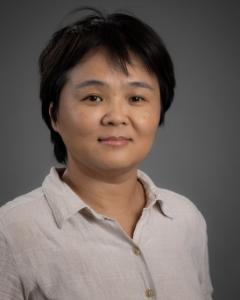
Florida Tech's Department of Biomedical Engineering and Science (BES) started this past summer and I am honored to serve as the inaugural department head. Combining biomedical engineering (BME) and biomedical science (BMS) within the same department presents both new challenges and exciting opportunities.
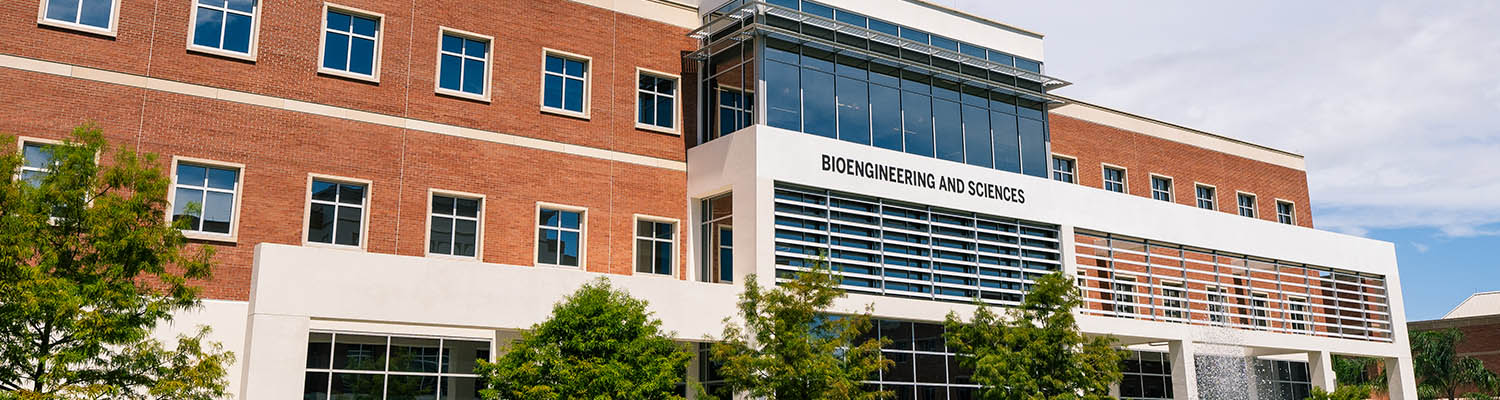
Our mission is clear: to foster excellence in education, advance cutting-edge research, and engage with the community, all with the overarching goal of enhancing human health and well-being. The brand-new Bioengineering and Sciences Building serves as the official home of our department. The state-of-the-art facility, designed for excellence in both teaching and research, has become a focal point, attracting increased attention from collaborators and visitors alike.
The Burrell College of Osteopathic Medicine is opening a branch on our campus and welcoming its first class of medical students in Fall 2024. BES is working closely with Burrell in creating a premedical pathway for our students.
BES has experienced an 11% increase in enrollment over the past year, reaching a current total of 329 students, including 101 graduate students. According to the 2023 rankings released by US News & World Report, our Engineering undergraduate program was ranked at #150, and the BMS and BME Graduate programs were ranked at #251 and #130, respectively. As we approach the end of 2023, I am pleased to bring you positive updates from our department.
Wishing you and your loved ones a safe, joyful Holiday season and a very Happy New Year!
Best Regards,
Linxia Gu, Ph.D., ASME Fellow
Professor and Department Head
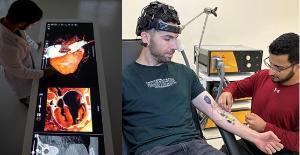
BES has identified four research clusters: Bioinstrumentation, Biomechanics, Molecular Biology, and Health Digital Twins. These clusters include research areas such as: Neural engineering and Biology, Medical devices, Cardiovascular system, Imaging/machine learning, Biomaterials and Tissue engineering, Traumatic injury, Dental implants, Joint functions, and Molecular/Genetic markers.
BES Welcomes New Faculty and Staff Members
Dr. Sujoy Ghosh Hajra joins the Biomedical Engineering Program as an assistant professor. Dr. Hajra focuses on creating non-invasive, portable technologies that provide robust information about brain and body systems. This involves electromagnetic, optical and mechanical sensors; advanced signal processing; and artificial intelligence and data integration.
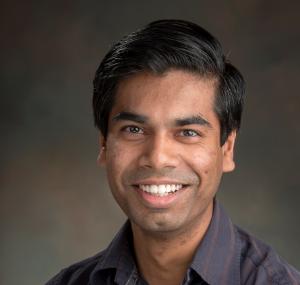
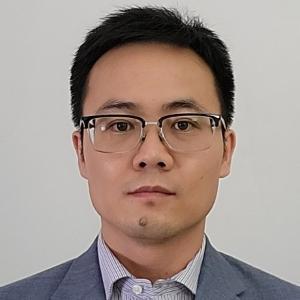
Dr. Jianhui Li joins the Biomedical Science Program as an assistant professor. He earned his Ph.D. at Virginia Tech, and conducted postdoctoral research at Yale University. The Li lab utilizes budding yeast Saccharomyces cerevisiae as a major experimental system with an integrated mix of genetic, biochemical, structural, cell and molecular biological approaches to elucidate the molecular mechanisms of proteasome regulation by cell signaling and autophagy. The knowledge his group learned will provide insights into therapeutic targets for drug development in human disease treatment.
Ms. Beste Caner has assumed the role of laboratory manager, overseeing the management of our housed in the Bioengineering and Sciences Building.
Ms. Teresa Mantz served as our departmental administrative assistant, contributing significantly to the smooth operation of the department and facilitating effective communication and coordination.
Faculty Spotlight
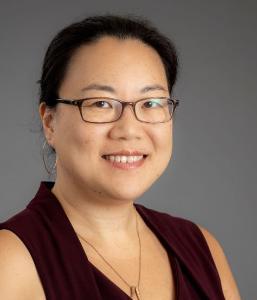
Dr. Karen Kim Guisbert received an NIH Research Enhancement Award titled "The Role of Calcium Transients in Fertilization and Early Embryogenesis in C. elegans." Disruptions to the oocyte-to-embryo transition contribute to infertility and miscarriage in humans. To explore regulation of these events, we developed a reporter to visualize the universally conserved calcium wave that occurs at the moment of fertilization in a living organism. Now, we propose to use this tool to investigate the underlying signaling pathways that coordinate this critical period of development.
Dr. Kunal Mitra received an NSF Early-concept Grant for Exploratory Research (EAGER) award titled "Eager: 3D Bioprinted Organoids for Studying the Mechanism of Cerebrovascular Aging." The goal of this project is developing novel, highly efficient, and reproducible 3D bioprinted organoids for cerebrovascular models which will allow producing of specific organoids with precisely controlled proportions and different types of senescent cells.
Celebrating Our Students
Undergraduate researchers Caylin Leak and Lillian Beavers won the first-place award for their poster presentation at the 2023 Tri-Beta Biological Society Convention.
Graduate student Mohamad Ahmed received the Richard and Teresa McNeight Endowed Fellowship.