

Cherne Lab | Michelle Cherne, Ph.D.
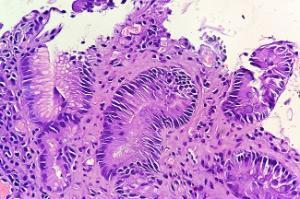 The extracellular matrix is a network of structural proteins and biomolecules that provides physical support and biochemical cues for our tissue. The Cherne lab investigates how this dynamic component of tissue architecture shapes epithelial and immune function of the mucosa during health and in response to infection. Our research focuses on the gastrointestinal tract, where complex interactions among host tissues, microbes, and the extracellular matrix help determine whether infection and inflammation are resolved or progress to disease.
A major focus of the laboratory is understanding how infection with the human pathogen, Helicobacter pylori, remodels the gastric extracellular matrix. H. pylori infects half the world’s population and is the leading cause of gastric cancer. However, the mechanisms behind the transition from H. pylori-gastritis to carcinoma are incompletely understood. We seek to uncover how extracellular matrix-mediated mechanisms may drive chronic inflammation and tissue remodeling associated with development of gastric adenocarcinoma. By revealing how the gastric mucosa responds to persistent infection and inflammation, we aim to identify potential biomarkers for disease and targets for therapeutic intervention.
To study these processes, the lab uses innovative bioengineering approaches to model the human gastric microenvironment. Using extracellular matrix hydrogels, immune cells, fibroblasts, and organoids all derived from the human stomach, we can recreate key features of the gastric mucosa in vitro. Using these models, we investigate the role of the extracellular matrix in mucosal homeostasis and host-pathogen interactions in physiologically relevant settings. These microphysiological systems provide powerful platforms for investigating human disease mechanisms and advancing translational mucosal biology.