

Crombie Lab | Timothy Crombie, Ph.D.
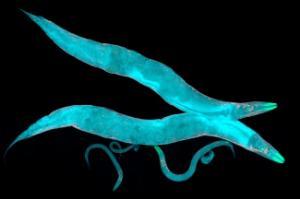
Understanding how genetic differences influence biological traits is a central goal of quantitative genetics. The Crombie Lab investigates these relationships using Caenorhabditis nematodes, powerful genetic models that combine extensive natural diversity with the ability to measure traits rapidly and automatically in large numbers of animals. By integrating genomics, large-scale trait measurements, and genetic mapping, we work to identify the genetic variants, genes, and biological pathways responsible for differences in health-related traits.
Our research investigates how natural genetic variation influences responses to environmental toxicants. We also examine how genetic differences affect neuronal dysfunction in models relevant to Parkinson's disease and dementias involving abnormal tau protein, including Alzheimer's disease. Identifying the genes and pathways underlying these differences can reveal biological mechanisms relevant to human health. Subsequent experiments in human cell lines can test whether these mechanisms also operate in human cells, helping establish the broader relevance of discoveries made in nematodes.
We also investigate the natural diversity and ecology of Caenorhabditis species in Florida. Through field collections, species identification, and whole-genome sequencing of wild isolates, we study how patterns of genetic diversity are shaped across Florida. These efforts expand our understanding of the genus while providing new strains and opportunities to develop genetic mapping populations for studying complex traits.